Ch. 16 - Adaptive Immunity
Bauman - Microbiology with Diseases by Taxonomy 6th Edition
Bauman6th EditionMicrobiology with Diseases by TaxonomyISBN: 9780134832302Non è quello che usi tu?Cambia libro di testo
Capitolo 16, Problema 2

Why does the body have both antibody and cell-mediated immune responses?

Guida verificata passo dopo passo
1
Understand that the immune system has two main types of responses: antibody-mediated (humoral) and cell-mediated immunity, each targeting different types of pathogens or infected cells.
Recognize that antibody-mediated immunity primarily involves B cells producing antibodies that neutralize extracellular pathogens like bacteria and viruses outside cells.
Know that cell-mediated immunity involves T cells, especially cytotoxic T cells, which identify and destroy infected host cells or intracellular pathogens that antibodies cannot reach.
Realize that having both responses allows the body to effectively combat a wide range of infections, whether the pathogen is free-floating or hidden inside cells.
Conclude that the dual system provides a comprehensive defense mechanism, ensuring pathogens are targeted in multiple ways to protect the body efficiently.

Risposta video verificata per un problema simile:

Questa soluzione video è stata consigliata dai nostri tutor come utile per risolvere questo problema.
Durata del video:
2m

Concetti chiave

Ecco i concetti essenziali che devi comprendere per rispondere correttamente alla domanda.

Antibody-Mediated (Humoral) Immunity

This immune response involves B cells producing antibodies that specifically bind to extracellular pathogens or toxins, neutralizing them or marking them for destruction. It is effective against bacteria, viruses in bodily fluids, and toxins.
Video consigliato:
00:48
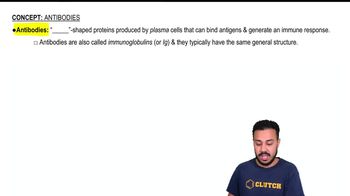
Antibodies

Cell-Mediated Immunity

This response is driven by T cells that directly attack infected or abnormal cells, such as virus-infected cells or cancer cells. It is crucial for eliminating intracellular pathogens that antibodies cannot reach.
Video consigliato:
03:27
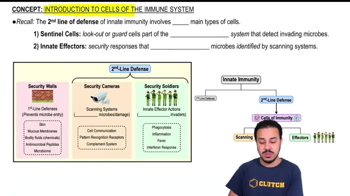
Introduction to Cells of the Immune System

Complementary Roles of Immune Responses

The body uses both antibody and cell-mediated immunity because they target different types of threats. Together, they provide a comprehensive defense by addressing pathogens both outside and inside cells, ensuring effective immune protection.
Video consigliato:
02:57
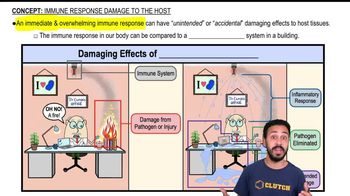
Intro to Immune Response Damage
Pratica correlata
Domanda del libro di testo

Mark each statement as either true or false. Rewrite false statements to make them true by changing the underlined words.

__________ Apoptosis is the term used to describe cellular suicide.

756
views

Domanda del libro di testo

MHC class II molecules bind to _________ and trigger __________ .

a. endogenous antigens; cytotoxic T cells

b. exogenous antigens; cytotoxic T cells

c. antibodies; B cells

d. endogenous antigens; helper T cells

e. exogenous antigens; helper T cells

1215
views
Domanda del libro di testo

Mark each statement as either true or false. Rewrite false statements to make them true by changing the underlined words.

__________ Lymphocytes with CD8 glycoprotein are helper T cells.

806
views
Domanda del libro di testo

The nearby image is a transmission electron micrograph of a dendritic cell. Indicate where a scientist could find molecules of MHCI and MHC II. Label a pseudopod and a vesicle.

<IMAGE>


1169
views
Domanda del libro di testo

Match each type of immunity in the numbered list with its associated example from the lettered list.

1. ___ Artificially acquired passive immunotherapy

2. ___ Naturally acquired active immunity

3. ___ Naturally acquired passive immunity

4. ___ Artificially acquired active immunity

A. Production of IgE in response to pollen

B. Acquisition of maternal antibodies in breast milk

C. Administration of tetanus toxoid

D. Administration of antitoxin

1179
views
Domanda del libro di testo

Rejection of a foreign skin graft is an example of:

a. Destruction of virus-infected cells

b. Tolerance

c. Antibody-mediated immunity

d. A secondary immune response

e. A cell-mediated immune response

1388
views