Ch. 9 - Controlling Microbial Growth in the Environment
Bauman - Microbiology with Diseases by Taxonomy 6th Edition
Bauman6th EditionMicrobiology with Diseases by TaxonomyISBN: 9780134832302Non è quello che usi tu?Cambia libro di testo
Capitolo 9, Problema 11

Which of the following substances would most effectively inhibit anaerobes?
a. Phenol
b. Silver
c. Ethanol
d. Hydrogen peroxide

Guida verificata passo dopo passo
1
Step 1: Understand the nature of anaerobes. Anaerobic microorganisms thrive in environments without oxygen and are often sensitive to substances that generate reactive oxygen species or disrupt their metabolic processes.
Step 2: Review the mode of action of each substance: Phenol disrupts cell membranes and denatures proteins; Silver ions interfere with microbial enzymes and DNA; Ethanol denatures proteins and dissolves lipids; Hydrogen peroxide produces reactive oxygen species that damage cellular components.
Step 3: Consider that anaerobes lack certain enzymes like catalase and superoxide dismutase, which protect against oxidative damage, making them particularly vulnerable to oxidative agents.
Step 4: Analyze which substance generates oxidative stress. Hydrogen peroxide decomposes to form reactive oxygen species, which are highly toxic to anaerobes due to their inability to neutralize these compounds effectively.
Step 5: Conclude that the substance producing reactive oxygen species (hydrogen peroxide) would most effectively inhibit anaerobic bacteria compared to the other options.

Risposta video verificata per un problema simile:

Questa soluzione video è stata consigliata dai nostri tutor come utile per risolvere questo problema.
Durata del video:
1m

Concetti chiave

Ecco i concetti essenziali che devi comprendere per rispondere correttamente alla domanda.

Anaerobic Microorganisms

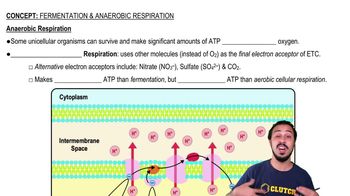
Anaerobes are microorganisms that do not require oxygen for growth and may even be harmed by it. They thrive in oxygen-free environments and have unique metabolic pathways that differ from aerobic organisms. Understanding their oxygen sensitivity is key to targeting them effectively.
Video consigliato:
03:35
Anaerobic Respiration

Mechanism of Action of Antimicrobial Agents

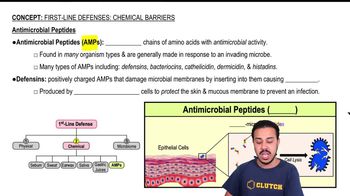
Different antimicrobial substances inhibit microbes through various mechanisms, such as disrupting cell walls, denaturing proteins, or generating reactive oxygen species. Knowing how each agent works helps predict its effectiveness against specific types of microbes, including anaerobes.
Video consigliato:
02:45
Antimicrobial Peptides

Effect of Oxidative Agents on Anaerobes

Oxidative agents like hydrogen peroxide produce reactive oxygen species that damage cellular components. Anaerobes, lacking protective enzymes against oxidative stress, are particularly susceptible to these agents, making oxidative substances effective inhibitors of anaerobic bacteria.
Video consigliato:
03:35
Anaerobic Respiration