Domanda del libro di testo
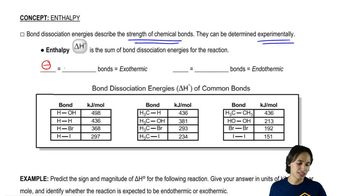
Using the bond-dissociation energies in Table 5.6,
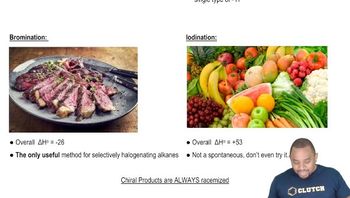
(a) predict whether or not an iodine radical would be selective for forming a single radical propane.
1336
views

 Mullins 1st EditionCh. 11 - Properties and Synthesis of Alkyl Halides: Radical ReactionsProblema 18a
 Guida verificata passo dopo passo
 04:09
04:09
 10:08
10:08 03:04
03:04Using the bond-dissociation energies in Table 5.6,
(a) predict whether or not an iodine radical would be selective for forming a single radical propane.
Based on the stability of the radicals produced, predict which bond in each pair would have the higher bond-dissociation energy.
(d)
Based on the stability of the radicals produced, predict which bond in each pair would have the higher bond-dissociation energy.
(c)
Using the bond-dissociation energies in Table 5.6,
(b) Will the transition state be reactant-like or product-like? Explain your answer.
When (1R,3S)-1-tert-butyl-1,3-dimethylcyclopentane is halogenated, one stereoisomer is produced in excess.
(a) Predict the identity of the major stereoisomer
Based on the stability of the radicals produced, predict which bond in each pair would have the higher bond-dissociation energy.
(b)