Indietro
 Mullins 1st EditionCh. 2 - General Chemistry Translated: Finding the Electrons
Problema 47b
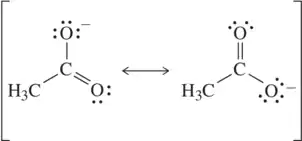
Each pair of structures represents two valid resonance structures. Use the arrow-pushing formalism to justify the formation of the one on the left from the one on the right.
(b)
Problema 48a
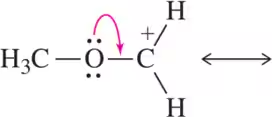
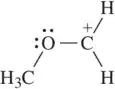
Draw the resonance structure that would result from the indicated movement of electrons.
(a)
Problema 49a
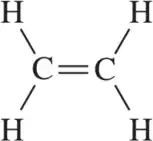
For each of the molecules shown, do the following:
(i) Identify all pushable pairs.
(ii) Identify all places where electrons can be pushed.
(iii) Draw one valid resonance structure.
(a)
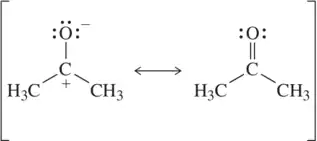
Problema 50
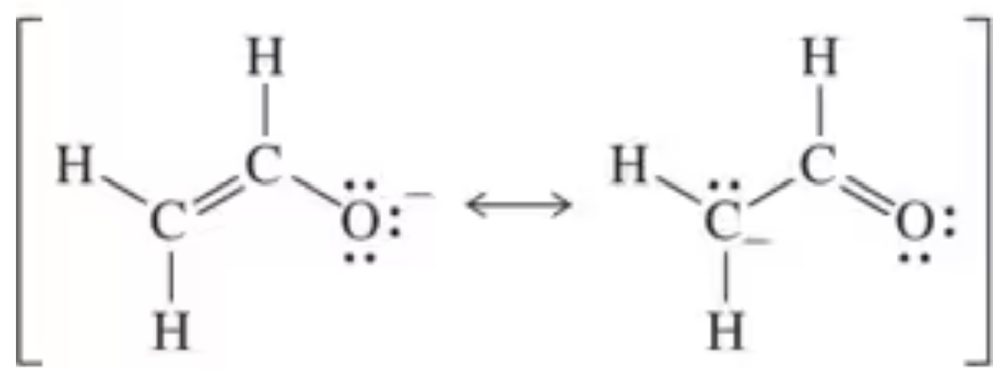
i) Which of the following resonance structures represents the 'actual' structure of the molecule shown? (ii) Which contributes more to the resonance hybrid? (iii) Why?
(a)
(b)
(c)
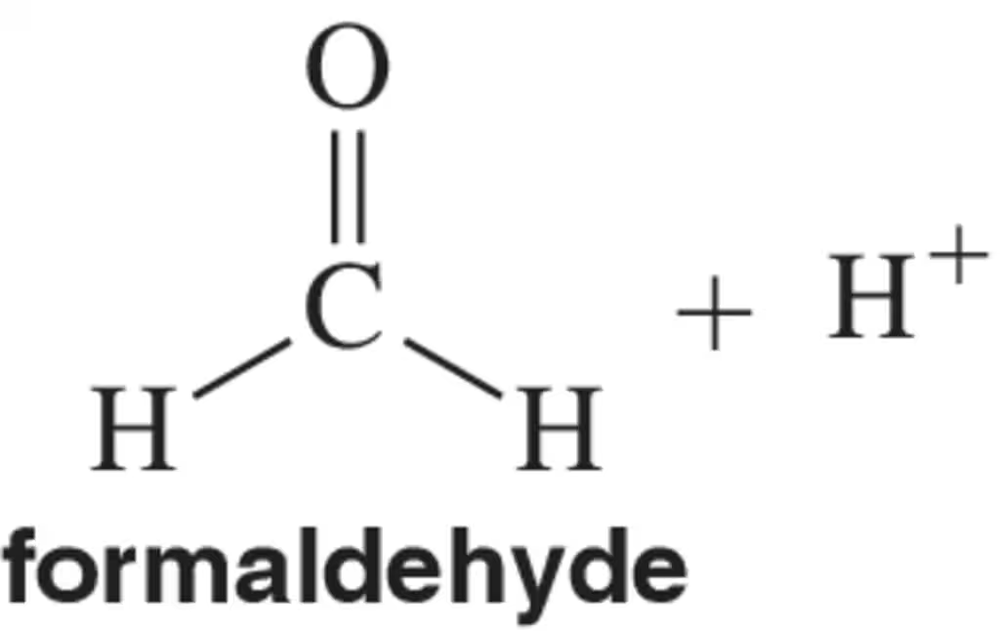
Problema 51
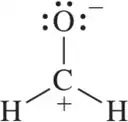
To which atom of formaldehyde would you expect H+ to add?
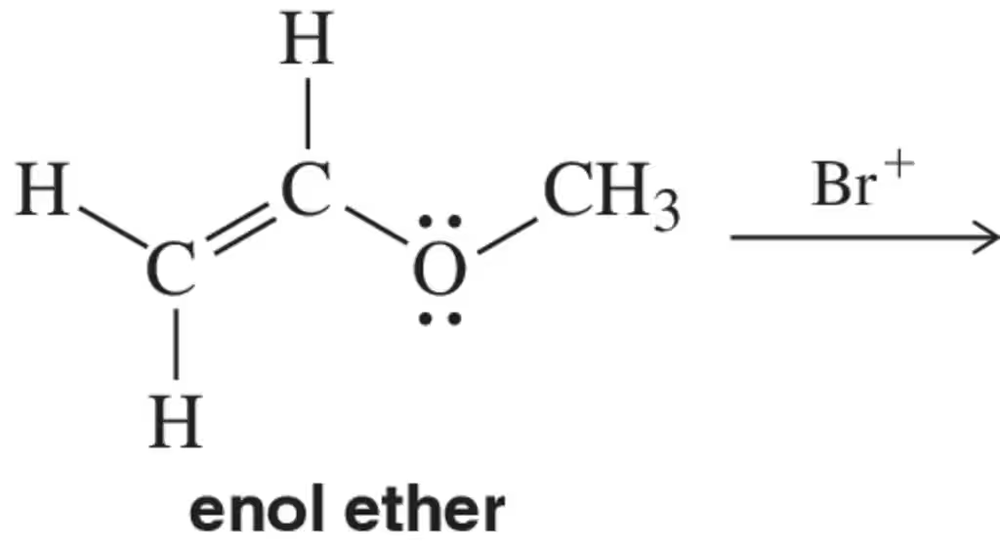
Problema 52
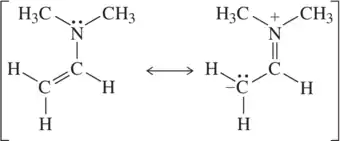
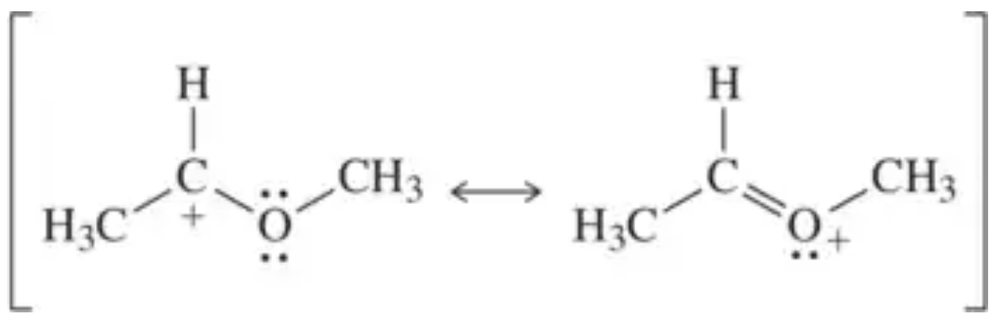
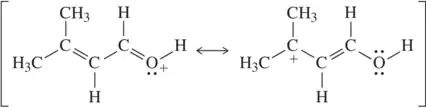
Which atoms in the enol ether would you expect to react with Br⁺ ?
Problema 53
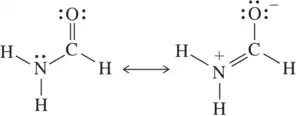
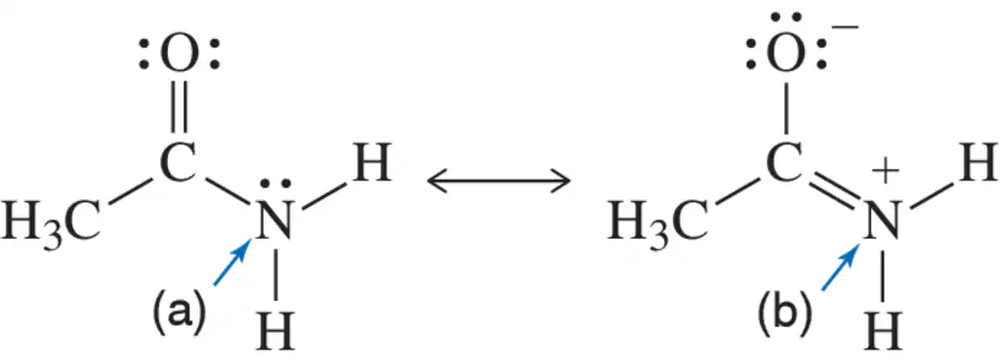
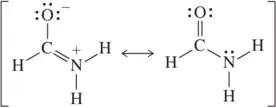
Assign the hybridization of the nitrogen in each resonance structure of acetamide.
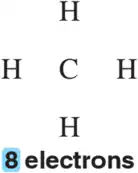
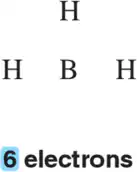
Problema 55c
How many valence electrons does each of the following contribute to a Lewis structure?
(c) B
Problema 55g
How many valence electrons does each of the following contribute to a Lewis structure?
(g) S
Problema 55i
How many valence electrons does each of the following contribute to a Lewis structure?
(i) Cl
Problema 55j
How many valence electrons does each of the following contribute to a Lewis structure?
(j) Al
Problema 55l
How many valence electrons does each of the following contribute to a Lewis structure?
(l) ―1 charge
Problema 58b
Show how the Lewis dot structure for each of the following atoms would overlap to form a single bond.
(b) C and O
Problema 59b
Which atom in each pair would you expect to be the central atom in a Lewis structure?
(b) C vs. O
Problema 59d
Which atom in each pair would you expect to be the central atom in a Lewis structure?
(d) C vs. N
Problema 59f
Which atom in each pair would you expect to be the central atom in a Lewis structure?
(f) C vs. F
Problema 60a
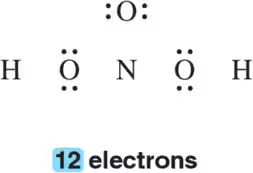
Given the atoms involved and the number of valence electrons remaining, complete the Lewis structure by placing bonds between atoms such that each has a full octet.
(a)
Problema 60d
Given the atoms involved and the number of valence electrons remaining, complete the Lewis structure by placing bonds between atoms such that each has a full octet.
(d)
Problema 60e
Given the atoms involved and the number of valence electrons remaining, complete the Lewis structure by placing bonds between atoms such that each has a full octet.
(e)
Problema 61a
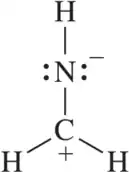
By moving an electron pair, draw a better Lewis structure that minimizes formal charges.
(a)
Problema 61b
By moving an electron pair, draw a better Lewis structure that minimizes formal charges.
(b)
Problema 62j
Draw the Lewis structure for the following molecular formulas.
(j) H2SO4
Problema 62l
Draw the Lewis structure for the following molecular formulas.
(l) SO42-
Problema 62u
Draw the Lewis structure for the following molecular formulas.
(u) NH4+
Problema 62v
Draw the Lewis structure for the following molecular formulas.
(v) CH5N
Problema 63a
In the following molecules, identify all pushable electron pairs.
(a)
Problema 64b
Two resonance structures are shown for each molecule. Use the arrow-pushing formalism to represent the electron flow from the structure on the left to the one on the right.
(b)
Problema 64d
Two resonance structures are shown for each molecule. Use the arrow-pushing formalism to represent the electron flow from the structure on the left to the one on the right.
(d)
Problema 64e
Two resonance structures are shown for each molecule. Use the arrow-pushing formalism to represent the electron flow from the structure on the left to the one on the right.
(e)
Problema 64f
Two resonance structures are shown for each molecule. Use the arrow-pushing formalism to represent the electron flow from the structure on the left to the one on the right.
(f)