
Ch. 23 - Benzene 1: Aromatic Stability and Substitution Reactions
Mullins - Organic Chemistry: A Learner Centered Approach 1st Edition
Mullins1st EditionOrganic Chemistry: A Learner Centered ApproachISBN: 9780137566471Non è quello che usi tu?Cambia libro di testo
Capitolo 22, Problema 61i

(i) Classify the following molecules as aromatic, nonaromatic, or antiaromatic.
(ii) For aromatic molecules, solve for n in Hückel’s rule. For all other molecules, explain which rule of aromaticity is being broken.
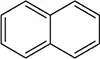
(i) Two interconnected hexagonal carbon rings with alternating double bonds, representing a molecular structure for classification.

Guida verificata passo dopo passo
1
Identify the molecule: The structure shown is naphthalene, which consists of two fused benzene rings.
Determine the number of π-electrons: Each benzene ring contributes 6 π-electrons, so naphthalene has a total of 10 π-electrons.
Apply Hückel's rule: For a molecule to be aromatic, it must have (4n + 2) π-electrons, where n is a non-negative integer.
Solve for n in Hückel's rule: Set 4n + 2 = 10 and solve for n. This will help determine if the molecule is aromatic.
Conclude the classification: If n is a whole number, the molecule is aromatic. If not, consider if the molecule is nonaromatic or antiaromatic based on its structure and electron count.

Concetti chiave

Ecco i concetti essenziali che devi comprendere per rispondere correttamente alla domanda.

Aromaticity

Aromaticity is a property of cyclic, planar structures with a ring of resonance bonds that leads to enhanced stability. For a molecule to be aromatic, it must follow Hückel's rule, which requires a conjugated system with (4n + 2) π electrons, where n is a non-negative integer. This rule helps determine the electron count needed for aromatic stability.
Video consigliato:
08:19
Intro to Aromaticity

Hückel's Rule

Hückel's rule is a criterion used to determine if a planar ring molecule is aromatic. It states that a molecule is aromatic if it has (4n + 2) π electrons, where n is a non-negative integer. This rule is crucial for identifying aromatic compounds, as it explains the electron configuration that contributes to the molecule's stability and reactivity.
Video consigliato:
03:54
The 18 and 16 Electron Rule

Antiaromaticity and Nonaromaticity

Antiaromatic compounds are cyclic, planar, and have a conjugated system, but they contain 4n π electrons, leading to instability. Nonaromatic compounds lack one or more of the criteria for aromaticity, such as planarity or a fully conjugated system. Understanding these distinctions helps classify molecules and predict their chemical behavior.
Video consigliato:
02:58
Determine the aromaticity