
Ch 18: A Macroscopic Description of Matter
Knight Calc - Physics for Scientists and Engineers 5th Edition
Knight Calc5th EditionPhysics for Scientists and EngineersISBN: 9780137344796Non è quello che usi tu?Cambia libro di testo
Capitolo 18, Problema 42

The 828-m-tall Burj Khalifa in Dubai is the world's tallest building. It's essentially a steel building wrapped in exterior paneling and glass. During construction, when the beams were exposed to the elements, the building was 36 cm taller on the hottest afternoon of the year than on the coldest morning. By how much did the temperature vary throughout the year?

Guida verificata passo dopo passo
1
Identify the concept involved: This problem deals with thermal expansion, which describes how materials expand or contract with temperature changes. The formula for linear thermal expansion is ΔL = α * L₀ * ΔT, where ΔL is the change in length, α is the coefficient of linear expansion, L₀ is the original length, and ΔT is the temperature change.
Extract the given values: The original length of the building is L₀ = 828 m (convert to cm: 828 m = 82800 cm). The change in length due to temperature is ΔL = 36 cm. The coefficient of linear expansion (α) for steel is approximately 12 × 10⁻⁶ /°C.
Rearrange the formula to solve for the temperature change (ΔT): Start with ΔL = α * L₀ * ΔT. Rearrange to isolate ΔT: ΔT = ΔL / (α * L₀).
Substitute the known values into the formula: Plug in ΔL = 36 cm, α = 12 × 10⁻⁶ /°C, and L₀ = 82800 cm into the equation ΔT = ΔL / (α * L₀).
Simplify the expression to calculate ΔT: Perform the division and multiplication to find the temperature change, ΔT, which represents the variation in temperature throughout the year.

Risposta video verificata per un problema simile:

Questa soluzione video è stata consigliata dai nostri tutor come utile per risolvere questo problema.
Durata del video:
2m

Concetti chiave

Ecco i concetti essenziali che devi comprendere per rispondere correttamente alla domanda.

Thermal Expansion

Thermal expansion refers to the tendency of materials to change in size or volume in response to changes in temperature. When temperatures rise, materials like steel expand, leading to an increase in height or length. This phenomenon is crucial in construction, as it affects structural integrity and design, especially in tall buildings like the Burj Khalifa.
Video consigliato:
Percorso guidato
05:21
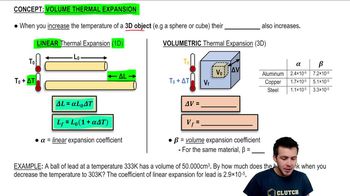
Volume Thermal Expansion

Coefficient of Linear Expansion

The coefficient of linear expansion is a material-specific value that quantifies how much a material expands per degree of temperature change. For steel, this coefficient is typically around 11 x 10^-6 per °C. Understanding this coefficient allows engineers to predict how much a structure will expand or contract with temperature fluctuations, which is essential for ensuring safety and stability.
Video consigliato:
Percorso guidato
07:31
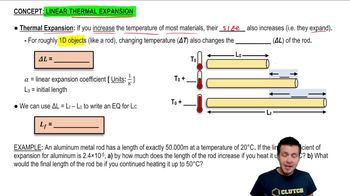
Linear Thermal Expansion

Temperature Variation

Temperature variation refers to the difference in temperature between two points in time or space. In the context of the Burj Khalifa, the temperature variation can be calculated by analyzing the height difference caused by thermal expansion. This concept is vital for understanding how environmental factors influence the physical properties of materials used in construction.
Video consigliato:
Percorso guidato
04:54
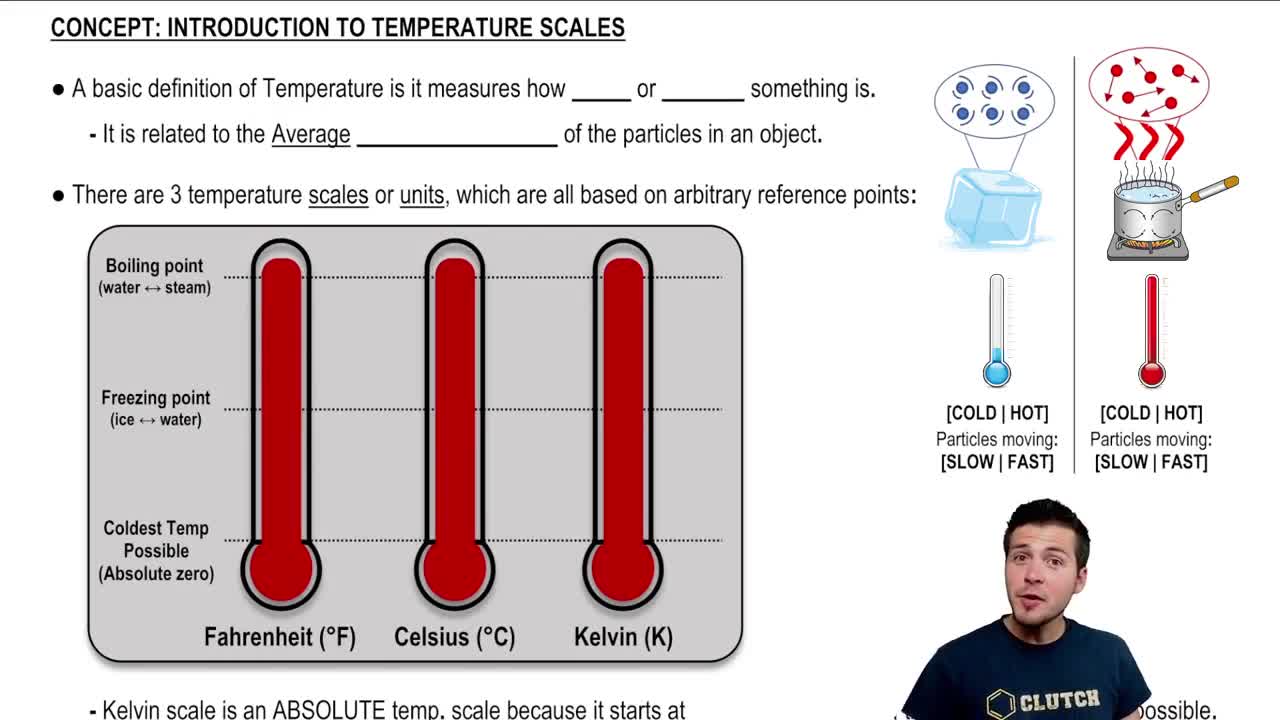
Introduction To Temperature Scales