
교과서 질문
The most common selective herbicide for killing broadleaf weeds is 2,4-dichlorophenoxyacetic acid (2,4-D). Show how you would synthesize 2,4-D from benzene, chloroacetic acid (ClCH2COOH), and any necessary reagents and solvents.
1579
views

 검증된 단계별 안내
 03:07
03:07
 01:17
01:17 01:47
01:47The most common selective herbicide for killing broadleaf weeds is 2,4-dichlorophenoxyacetic acid (2,4-D). Show how you would synthesize 2,4-D from benzene, chloroacetic acid (ClCH2COOH), and any necessary reagents and solvents.
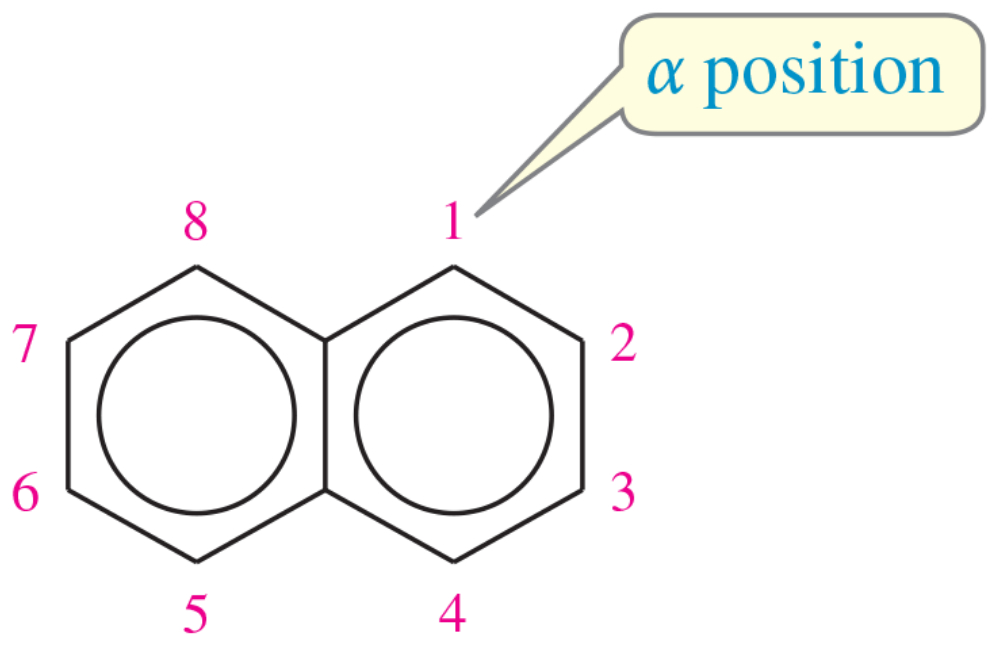
Electrophilic aromatic substitution usually occurs at the 1-position of naphthalene, also called the 1-position. Predict the major products of the reactions of naphthalene with the following reagents.
(e) cyclohexanol and BF3
The following compound reacts with a hot, concentrated solution of NaOH (in a sealed tube) to give a mixture of two products. Propose structures for these products, and give a mechanism to account for their formation.
Electrophilic aromatic substitution usually occurs at the 1-position of naphthalene, also called the a position. Predict the major products of the reactions of naphthalene with the following reagents.
(d) isobutylene and HF
α-Tetralone undergoes Birch reduction to give an excellent yield of a single product. Predict the structure of the product, and propose a mechanism for its formation.
Show the products you expect when each compound reacts with NBS with light shining on the reaction.
(d)