Ch. 17 - Reactions of Aromatic Compounds
Wade - Organic Chemistry 9th Edition
Wade9th EditionOrganic ChemistryISBN: 9780135213728당신이 사용하는 게 아니라요?교과서 변경
17장, 문제 58d

Show the products you expect when each compound reacts with NBS with light shining on the reaction.
(d)

검증된 단계별 안내
1
Step 1: Recognize the reaction conditions. NBS (N-Bromosuccinimide) in the presence of light is used for allylic or benzylic bromination. This reaction selectively replaces a hydrogen atom at the allylic or benzylic position with a bromine atom.
Step 2: Identify the benzylic position in the given compound. The structure contains a benzene ring attached to a propyl group. The benzylic position is the carbon atom directly attached to the benzene ring in the propyl chain.
Step 3: Determine the radical intermediate. Under light, the reaction proceeds via a radical mechanism. The benzylic hydrogen is abstracted to form a benzylic radical, which is stabilized due to resonance with the benzene ring.
Step 4: Add bromine to the benzylic radical. The bromine atom from NBS reacts with the benzylic radical to form the brominated product. The bromine is added at the benzylic position.
Step 5: Verify the product structure. The final product will have a bromine atom attached to the benzylic position, replacing one of the hydrogens. The rest of the molecule remains unchanged.

비슷한 문제에 대한 검증된 영상 답변:

이 영상 해법은 위 문제에 도움이 된다고 튜터들이 추천한 것입니다.
영상 길이:
4m

주요 개념

질문에 올바르게 답하기 위해 반드시 이해해야 하는 핵심 개념들은 다음과 같습니다.

NBS (N-Bromosuccinimide)

NBS is a reagent commonly used in organic chemistry for bromination reactions, particularly in the presence of light. It generates bromine radicals under photolytic conditions, which can abstract hydrogen atoms from alkenes or alkanes, leading to the formation of brominated products. Understanding how NBS functions is crucial for predicting the products of reactions involving this compound.
추천 영상:
가이드 코스
3:06
Synthesis of Amino Acids: N-Phthalimidomalonic Ester Synthesis Concept 1

Radical Mechanism

The radical mechanism involves the formation and reaction of free radicals, which are highly reactive species with unpaired electrons. In the context of NBS reactions, light initiates the homolytic cleavage of the N-Br bond, generating bromine radicals that can abstract hydrogen from the substrate. This mechanism is essential for understanding how products are formed in radical bromination reactions.
추천 영상:
03:28
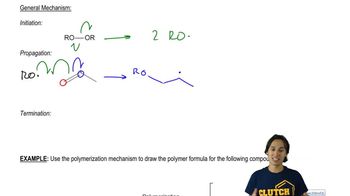
The mechanism of Radical Polymerization.

Substitution vs. Addition Reactions

In organic chemistry, substitution reactions involve replacing one atom or group in a molecule with another, while addition reactions involve adding atoms or groups to a molecule. When reacting with NBS, the process typically leads to substitution of hydrogen atoms with bromine, particularly at allylic positions. Recognizing the type of reaction occurring helps in predicting the structure of the final products.
추천 영상:
09:23
1,2 vs 1,4 Addition