

Ch. 24 The Urinary System
Amerman- Human Anatomy & Physiology 3e
Amerman3rd EditionHuman Anatomy & PhysiologyISBN: 9780138247201, 9780138247928, 9780138201814당신이 사용하는 게 아니라요?교과서 변경
24장, 문제 15

Normal urine should have which of the following properties? Circle all that apply.
a. Translucency
b. Yellowish pigment
c. Cloudy appearance
d. pH less than 4.5

검증된 단계별 안내
1
Step 1: Understand the normal properties of urine. Normal urine is typically translucent, meaning it is clear enough to see through, but not completely transparent.
Step 2: Recognize the color of normal urine. It usually has a yellowish pigment due to the presence of urochrome, a pigment resulting from the breakdown of hemoglobin.
Step 3: Evaluate the appearance of urine. Cloudy urine is not a normal property and may indicate the presence of an infection, excess protein, or other abnormalities.
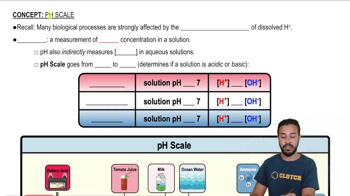
Step 4: Assess the pH range of normal urine. The pH of normal urine typically ranges from 4.5 to 8. A pH less than 4.5 would be considered abnormally acidic and not a normal property.
Step 5: Based on the above information, identify which options (a, b, c, d) align with the normal properties of urine and exclude those that do not.

비슷한 문제에 대한 검증된 영상 답변:

이 영상 해법은 위 문제에 도움이 된다고 튜터들이 추천한 것입니다.
도움이 되었나요?

주요 개념

질문에 올바르게 답하기 위해 반드시 이해해야 하는 핵심 개념들은 다음과 같습니다.

Urine Characteristics

Normal urine typically has specific characteristics, including translucency and a yellowish pigment due to the presence of urochrome. These properties indicate proper hydration and metabolic function. Abnormal characteristics, such as cloudiness, may suggest the presence of substances like bacteria or crystals, indicating potential health issues.
추천 영상:
00:48
5 Characteristics of Epithelia

Urine pH

The pH of normal urine usually ranges from 4.5 to 8, with an average around 6. A pH less than 4.5 is considered acidic and may indicate conditions such as metabolic acidosis or dehydration. Understanding urine pH is essential for assessing metabolic and renal health.
추천 영상:

Urinalysis

Urinalysis is a common diagnostic tool used to evaluate the physical, chemical, and microscopic properties of urine. It helps in detecting abnormalities that may indicate various health conditions. Recognizing normal versus abnormal findings in urinalysis is crucial for effective clinical assessment.
관련 실천
교과서 질문

Which of the following conditions does not contribute to the creation and/or maintenance of the medullary osmotic gradient?

a. The countercurrent exchanger of the vasa recta

b. The countercurrent multiplier of the nephron loops of cortical nephrons

c. The countercurrent multiplier of the nephron loops of juxtamedullary nephrons

d. The permeability of the medullary collecting system to urea and other ions

759
views
교과서 질문

Net filtration pressure in most capillary beds favors:

a. Absorption

b. Osmosis

c. Filtration

d. Secretion

1126
views
교과서 질문

Dilute urine is produced when decreased levels of______ are secreted.

a. Aldosterone

b. Atrial natriuretic peptide

c. ADH

d. None of the above

716
views
교과서 질문

The kidneys produce _____ urine when the osmolarity of the body's fluids increases. They produce _____ urine when the osmolarity of the body's fluids decreases.

915
views
교과서 질문

Fill in the blanks for each of the following statements:

a. The process by which urine is eliminated is called _____, and it is mediated by reflexes involving the _____ nervous system.

b. The mucosa of the organs of the urinary tract is lined with _____ epithelium.

c. The three layers of smooth muscle in the urinary bladder are known as the _____ muscle.

d. The female urethra provides a passageway for _____, whereas the male urethra provides a passageway for _____ and _____.

1010
views
교과서 질문

The GFR may be estimated by measuring the rate at which certain substances are removed from the blood, which is known as:

a. Renal clearance

b. Plasma creatinine

c. Glomerular hydrostatic pressure

d. Inulin estimation

833
views