
Ch. 24 The Urinary System
Amerman- Human Anatomy & Physiology 3e
Amerman3rd EditionHuman Anatomy & PhysiologyISBN: 9780138247201, 9780138247928, 9780138201814당신이 사용하는 게 아니라요?교과서 변경
24장, 문제 14

The kidneys produce _____ urine when the osmolarity of the body's fluids increases. They produce _____ urine when the osmolarity of the body's fluids decreases.

검증된 단계별 안내
1
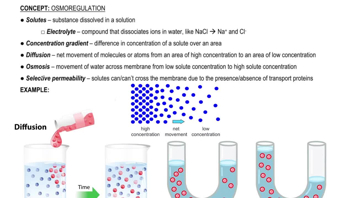
Understand the concept of osmolarity: Osmolarity refers to the concentration of solutes in a solution. When the osmolarity of the body's fluids increases, it means the body has a higher concentration of solutes (e.g., salts) and less water. Conversely, when osmolarity decreases, the body has a lower concentration of solutes and more water.
Recognize the role of the kidneys in maintaining homeostasis: The kidneys regulate the body's fluid balance by adjusting the concentration and volume of urine based on the osmolarity of the body's fluids.
When osmolarity increases: The body needs to conserve water to dilute the solutes. The kidneys respond by producing concentrated urine, which contains less water and more solutes.
When osmolarity decreases: The body needs to excrete excess water to maintain balance. The kidneys respond by producing dilute urine, which contains more water and fewer solutes.
Summarize the relationship: The kidneys produce concentrated urine when the osmolarity of the body's fluids increases and dilute urine when the osmolarity of the body's fluids decreases.

비슷한 문제에 대한 검증된 영상 답변:

이 영상 해법은 위 문제에 도움이 된다고 튜터들이 추천한 것입니다.

주요 개념

질문에 올바르게 답하기 위해 반드시 이해해야 하는 핵심 개념들은 다음과 같습니다.

Osmolarity

Osmolarity refers to the concentration of solutes in a solution, which affects the movement of water across cell membranes. In the context of the kidneys, increased osmolarity indicates a higher concentration of solutes in the blood, prompting the kidneys to conserve water and produce concentrated urine. Conversely, decreased osmolarity signals a lower concentration of solutes, leading to the excretion of dilute urine.
추천 영상:
가이드 코스
07:59
Osmosis and Osmolarity

Antidiuretic Hormone (ADH)

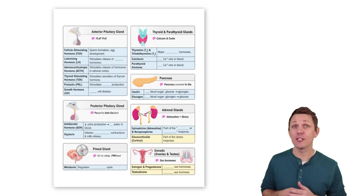
Antidiuretic Hormone (ADH), also known as vasopressin, is a hormone produced by the hypothalamus and released by the posterior pituitary gland. It plays a crucial role in regulating water balance in the body by increasing water reabsorption in the kidneys. When osmolarity rises, ADH levels increase, leading to the production of concentrated urine; when osmolarity falls, ADH secretion decreases, resulting in dilute urine.
추천 영상:
13:06
Review of Major Hormones

Kidney Function and Urine Concentration

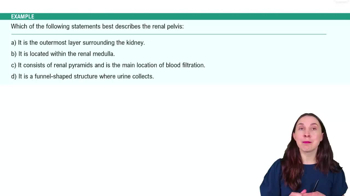
The kidneys are vital organs responsible for filtering blood, regulating electrolyte balance, and maintaining fluid homeostasis. They adjust urine concentration based on the body's hydration status and osmolarity. When the body is dehydrated or osmolarity is high, the kidneys produce less, more concentrated urine to retain water; when hydrated or osmolarity is low, they produce more, dilute urine to expel excess water.
추천 영상:
1:01
The Kidneys Example 2