Ch. 10 Blood
Marieb - Essentials of Human Anatomy & Physiology 13th Edition
Marieb13th EditionEssentials of Human Anatomy & PhysiologyISBN: 9780135624340당신이 사용하는 게 아니라요?교과서 변경
10장, 문제 13

More than one choice may apply.
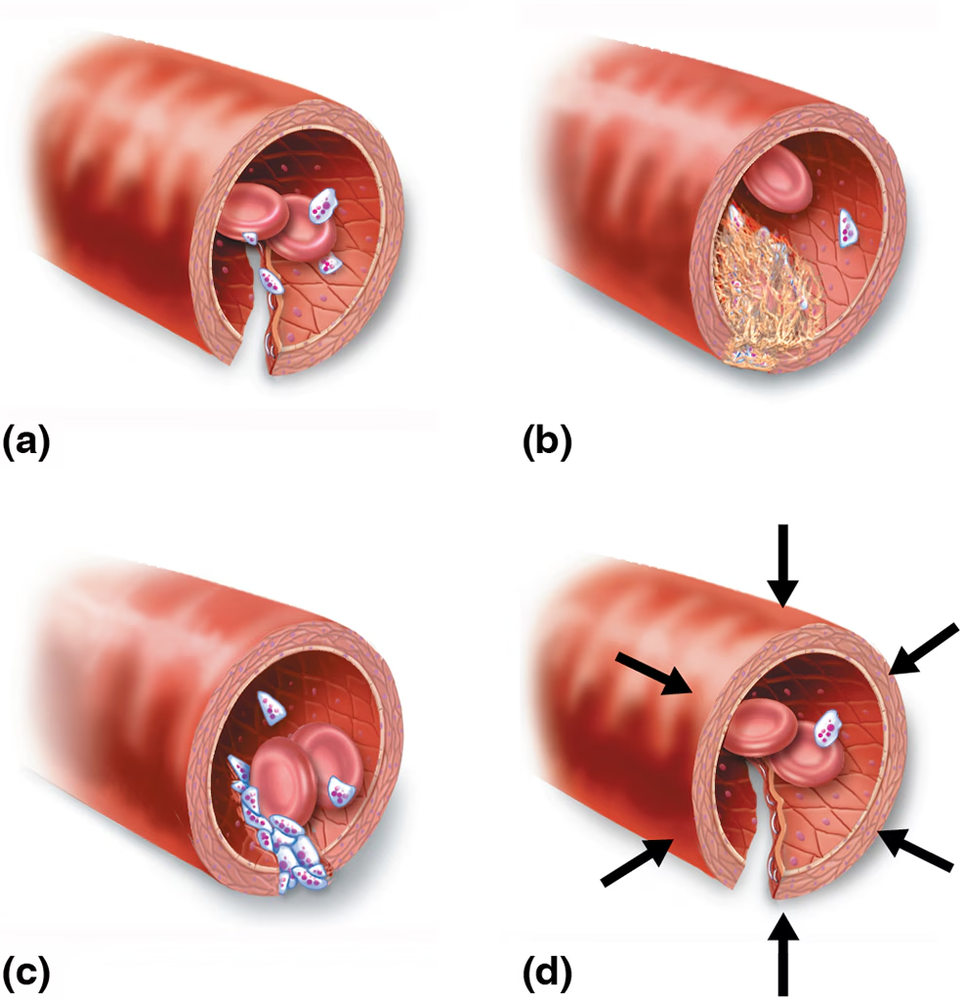
Place the letters of these events in the order they occur during hemostasis.

검증된 단계별 안내
1
Step 1: Identify the initial event in hemostasis, which is vascular spasm. This occurs immediately after the blood vessel is damaged, causing the vessel to constrict and reduce blood flow. In the images, this corresponds to image (d), where the vessel shows constriction indicated by arrows.
Step 2: Next, platelet plug formation occurs. Platelets adhere to the damaged site and aggregate to form a temporary plug. This is shown in image (c), where platelets are clustering at the injury site.
Step 3: Following platelet plug formation, coagulation or blood clotting takes place. This involves the conversion of fibrinogen to fibrin, which stabilizes the platelet plug by forming a mesh. Image (b) depicts this stage with the fibrin mesh forming inside the vessel.
Step 4: The final step is the repair and removal of the clot once the vessel is healed, but this is not shown in the images provided. The sequence of hemostasis events to order is therefore vascular spasm (d), platelet plug formation (c), and coagulation (b).
Step 5: To summarize, the correct order of events during hemostasis based on the images is: (d) vascular spasm, (c) platelet plug formation, and (b) coagulation.

비슷한 문제에 대한 검증된 영상 답변:

이 영상 해법은 위 문제에 도움이 된다고 튜터들이 추천한 것입니다.
도움이 되었나요?

주요 개념

질문에 올바르게 답하기 위해 반드시 이해해야 하는 핵심 개념들은 다음과 같습니다.

Vascular Spasm

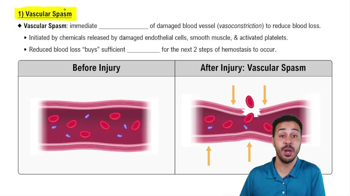
Vascular spasm is the immediate constriction of a damaged blood vessel to reduce blood flow and limit blood loss. This is the first response during hemostasis and helps minimize bleeding by narrowing the vessel at the injury site.
추천 영상:
가이드 코스
3:18
Vascular Spasm

Platelet Plug Formation

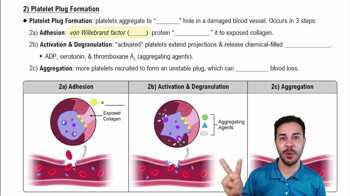
Platelet plug formation involves platelets adhering to the exposed collagen fibers of the damaged vessel wall, becoming activated, and aggregating to form a temporary plug. This step is crucial for sealing small breaks in the vessel and preventing further blood loss.
추천 영상:
가이드 코스
9:43
Platelet Plug Formation

Coagulation (Blood Clotting)

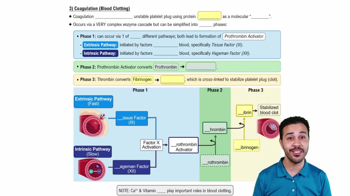
Coagulation is the process where fibrin threads form a mesh that stabilizes the platelet plug, creating a more durable blood clot. This involves a cascade of clotting factors that convert fibrinogen into fibrin, solidifying the clot and ensuring long-term vessel repair.
추천 영상:
가이드 코스
10:05
Coagulation (Blood Clotting)