Ch. 12 The Lymphatic System and Body Defenses
Marieb - Essentials of Human Anatomy & Physiology 13th Edition
Marieb13th EditionEssentials of Human Anatomy & PhysiologyISBN: 9780135624340당신이 사용하는 게 아니라요?교과서 변경
12장, 문제 15

What is complement? Besides bacterial lysis, what are some of the roles of complement?

검증된 단계별 안내
1
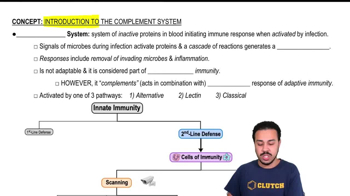
Step 1: Define complement. Complement is a group of proteins found in the blood plasma and on cell surfaces that play a crucial role in the immune system. These proteins work together to enhance the ability of antibodies and phagocytic cells to clear pathogens and damaged cells, promote inflammation, and attack the pathogen's cell membrane.
Step 2: Explain bacterial lysis. Complement proteins can form a membrane attack complex (MAC), which creates pores in the bacterial cell membrane, leading to cell lysis and death of the pathogen.
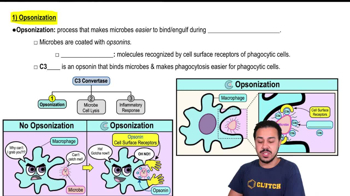
Step 3: Discuss the role of complement in opsonization. Complement proteins, such as C3b, bind to the surface of pathogens, marking them for phagocytosis by immune cells like macrophages and neutrophils.
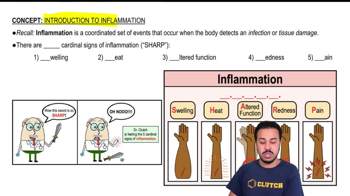
Step 4: Explain the role of complement in inflammation. Complement proteins, such as C3a and C5a, act as chemotactic factors that recruit immune cells to the site of infection and promote inflammation by increasing vascular permeability.
Step 5: Highlight the role of complement in immune clearance. Complement helps remove immune complexes (antigen-antibody complexes) from circulation by facilitating their transport to the liver and spleen for disposal, preventing tissue damage.

비슷한 문제에 대한 검증된 영상 답변:

이 영상 해법은 위 문제에 도움이 된다고 튜터들이 추천한 것입니다.
영상 길이:
3m

주요 개념

질문에 올바르게 답하기 위해 반드시 이해해야 하는 핵심 개념들은 다음과 같습니다.

Complement System

The complement system is a part of the immune system consisting of proteins that enhance the ability of antibodies and phagocytic cells to clear pathogens from an organism. It plays a crucial role in innate immunity and can be activated through three pathways: classical, lectin, and alternative. This system helps in opsonization, inflammation, and the formation of the membrane attack complex, which can lyse pathogens.
추천 영상:
가이드 코스
4:25
Complement System

Opsonization

Opsonization is the process by which pathogens are marked for destruction by immune cells. Complement proteins bind to the surface of pathogens, enhancing their recognition and uptake by phagocytes such as macrophages and neutrophils. This process is vital for efficient clearance of infections and helps in the activation of the adaptive immune response.
추천 영상:

Inflammation

Inflammation is a biological response to harmful stimuli, such as pathogens or tissue injury, characterized by redness, heat, swelling, and pain. The complement system contributes to inflammation by promoting the release of pro-inflammatory mediators and attracting immune cells to the site of infection. This response is essential for containing infections and initiating tissue repair.
추천 영상: