Ch. 13 The Respiratory System
Marieb - Essentials of Human Anatomy & Physiology 13th Edition
Marieb13th EditionEssentials of Human Anatomy & PhysiologyISBN: 9780135624340당신이 사용하는 게 아니라요?교과서 변경
13장, 문제 8

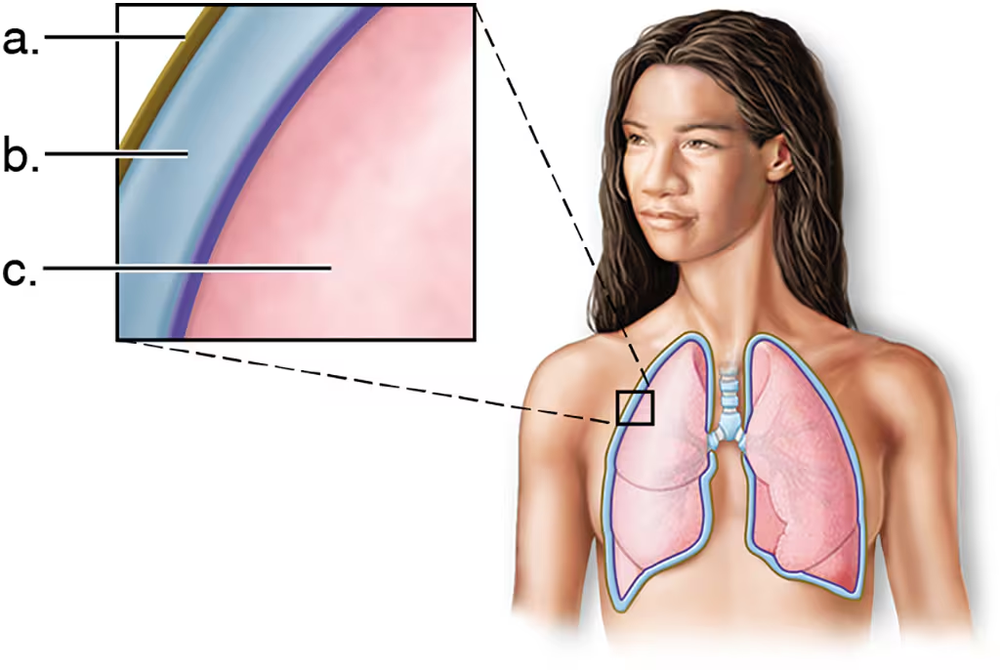
Which of the following represents intrapleural pressure?
Illustration of human lungs with labels indicating intrapleural pressure and surrounding structures.

검증된 단계별 안내
1
Understand the concept of intrapleural pressure: Intrapleural pressure is the pressure within the pleural cavity, the space between the visceral and parietal pleurae surrounding the lungs. It is typically negative relative to atmospheric pressure, which helps keep the lungs inflated.
Review the physiological mechanism: The negative intrapleural pressure is created by the opposing forces of the lungs' elastic recoil (which pulls inward) and the chest wall's tendency to expand outward. This balance maintains the negative pressure.
Analyze the options provided: Carefully examine the choices (a, b, c) to determine which ones describe or represent intrapleural pressure. Look for descriptions or values that align with the concept of a pressure that is negative relative to atmospheric pressure.
Eliminate incorrect options: Discard any choices that describe pressures unrelated to the pleural cavity, such as atmospheric pressure, alveolar pressure, or pressures that are positive rather than negative.
Select the correct answers: Identify all options that accurately represent intrapleural pressure based on your understanding of its definition and physiological role.

비슷한 문제에 대한 검증된 영상 답변:

이 영상 해법은 위 문제에 도움이 된다고 튜터들이 추천한 것입니다.
영상 길이:
2m
도움이 되었나요?

주요 개념

질문에 올바르게 답하기 위해 반드시 이해해야 하는 핵심 개념들은 다음과 같습니다.

Intrapleural Pressure

Intrapleural pressure is the pressure within the pleural cavity, the thin fluid-filled space between the two pleurae of the lungs. It is typically negative relative to atmospheric pressure, which helps keep the lungs inflated and facilitates breathing. This pressure is crucial for maintaining lung expansion and preventing lung collapse.
추천 영상:
5:46
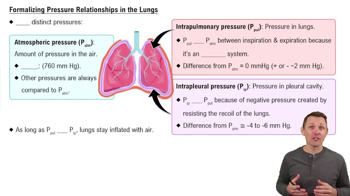
Formalizing Pressure Relationships in the Lungs

Pleural Cavity

The pleural cavity is the space between the visceral pleura (which covers the lungs) and the parietal pleura (which lines the chest wall). This cavity contains pleural fluid, which reduces friction during breathing and helps maintain the negative pressure necessary for lung inflation. Understanding the anatomy and function of the pleural cavity is essential for grasping intrapleural pressure.
추천 영상:
4:01
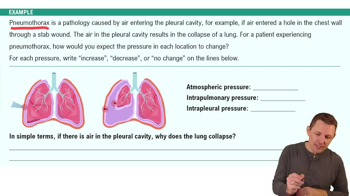
Pressure in the Lungs and Pleural Cavity Example 2

Respiratory Mechanics

Respiratory mechanics refers to the physical principles governing the movement of air into and out of the lungs. It includes concepts such as pressure gradients, lung compliance, and airway resistance. A solid understanding of respiratory mechanics is vital for interpreting how intrapleural pressure influences ventilation and overall respiratory function.
추천 영상:
3:02
Internal Regulation - The Myogenic Mechanism