Ch. 3 Cells and Tissues
Marieb - Essentials of Human Anatomy & Physiology 13th Edition
Marieb13th EditionEssentials of Human Anatomy & PhysiologyISBN: 9780135624340당신이 사용하는 게 아니라요?교과서 변경
3장, 문제 9a

Match the appropriate structure with the proper description and/or function.
1. Made of dense, irregular connective tissue
 2. Produce sebum
3. Helps regulate body temperature by producing sweat
4. Cause fingerprints
5. Houses the hair root
6. Superficial keratinized stratified squamous epithelium
7. Deep pressure receptors
8. Vascular layer that houses skin appendages
a. Dermal papillae
b. Lamellar corpuscles
c. Dermis
d. Hair follicle
e. Epidermis
f. Eccrine sweat gland
g. Reticular layer
h. Sebaceous glands

검증된 단계별 안내
1
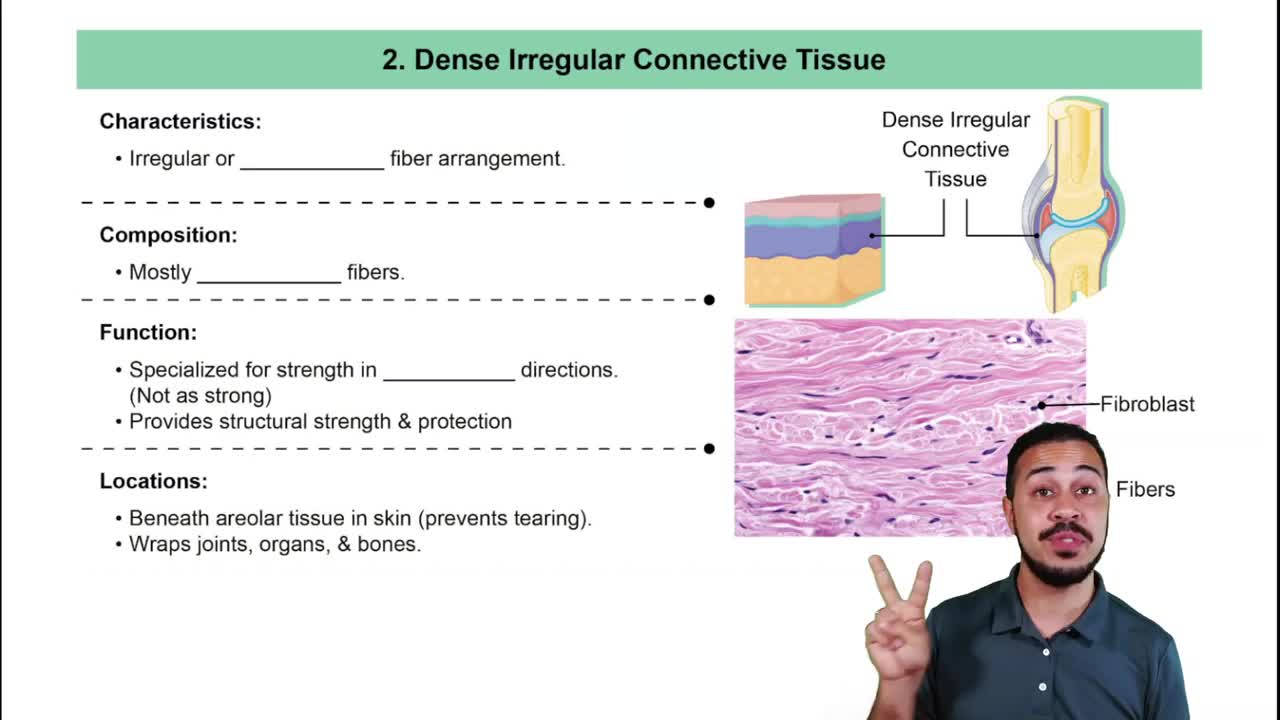
Step 1: Understand the characteristics of dense irregular connective tissue. Dense irregular connective tissue is composed of collagen fibers arranged in an irregular pattern, providing strength and flexibility in multiple directions. It is commonly found in areas requiring structural support and resilience.
Step 2: Review the structure and function of each option provided in the question. For example, the dermis is a layer of skin that contains dense irregular connective tissue, while the reticular layer is a specific part of the dermis that is rich in this tissue type.
Step 3: Eliminate options that do not match the description of dense irregular connective tissue. For instance, the epidermis is made of stratified squamous epithelium, not connective tissue, and eccrine sweat glands are composed of epithelial cells specialized for secretion.
Step 4: Focus on structures that are known to contain dense irregular connective tissue. The dermis, particularly the reticular layer, is a strong candidate because it provides structural support to the skin and is composed of dense irregular connective tissue.
Step 5: Match the correct structures (e.g., dermis and reticular layer) with the description of being made of dense irregular connective tissue, ensuring that the answer aligns with the anatomical and physiological characteristics of these structures.

비슷한 문제에 대한 검증된 영상 답변:

이 영상 해법은 위 문제에 도움이 된다고 튜터들이 추천한 것입니다.
영상 길이:
2m
도움이 되었나요?

주요 개념

질문에 올바르게 답하기 위해 반드시 이해해야 하는 핵심 개념들은 다음과 같습니다.

Dense Irregular Connective Tissue

Dense irregular connective tissue is a type of connective tissue characterized by a thick, interwoven network of collagen fibers that provide strength and support in multiple directions. This structure is crucial for areas of the body that experience tension from various angles, such as the dermis of the skin, which helps maintain its integrity and resilience.
추천 영상:
가이드 코스
06:20
Dense Irregular Connective Tissue

Dermis

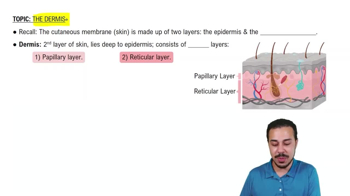
The dermis is the thick layer of skin located beneath the epidermis, composed primarily of dense irregular connective tissue. It contains blood vessels, nerves, hair follicles, and various glands, playing a vital role in thermoregulation, sensation, and providing structural support to the skin.
추천 영상:
01:20
Introduction to the Dermis

Reticular Layer

The reticular layer is the deeper part of the dermis, consisting of dense irregular connective tissue that provides strength and elasticity to the skin. It houses important structures such as sweat glands, sebaceous glands, and larger blood vessels, contributing to the overall function and health of the skin.
추천 영상:
02:31
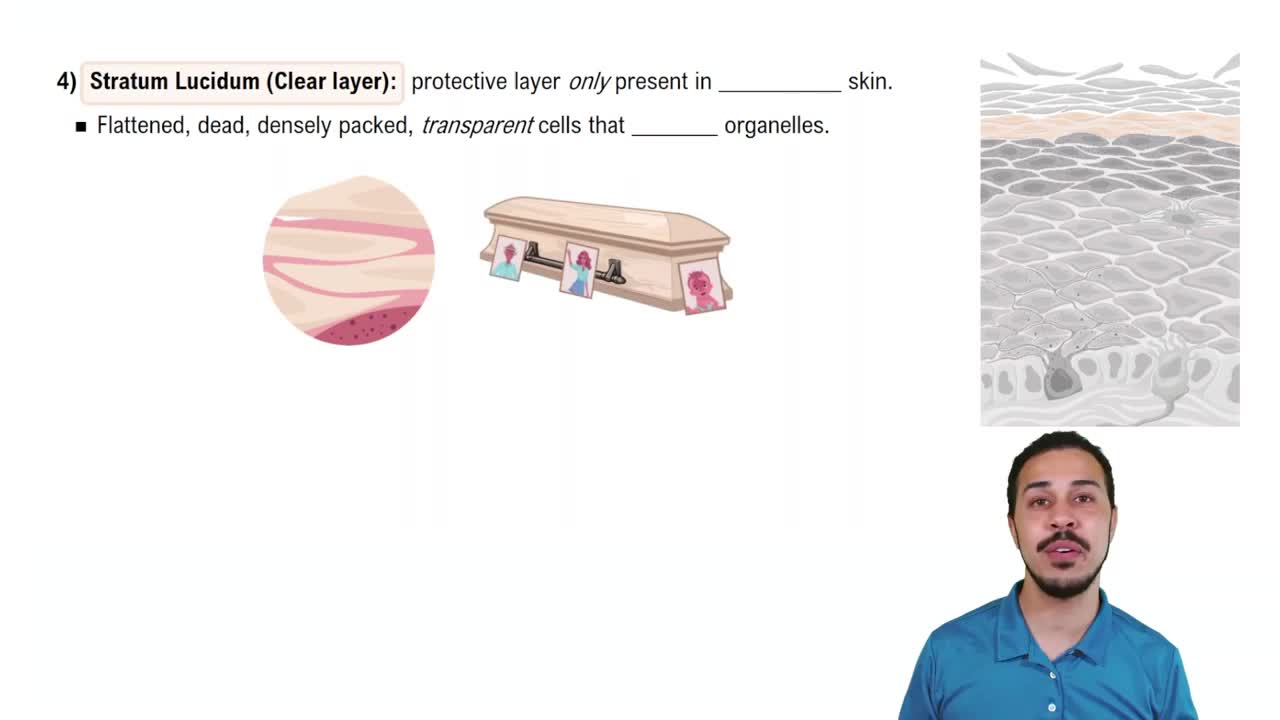
Epidermal Layers: Stratum Lucidum (Clear Layer)