
Ch. 3 Cells and Tissues
Marieb - Essentials of Human Anatomy & Physiology 13th Edition
Marieb13th EditionEssentials of Human Anatomy & PhysiologyISBN: 9780135624340당신이 사용하는 게 아니라요?교과서 변경
3장, 문제 9

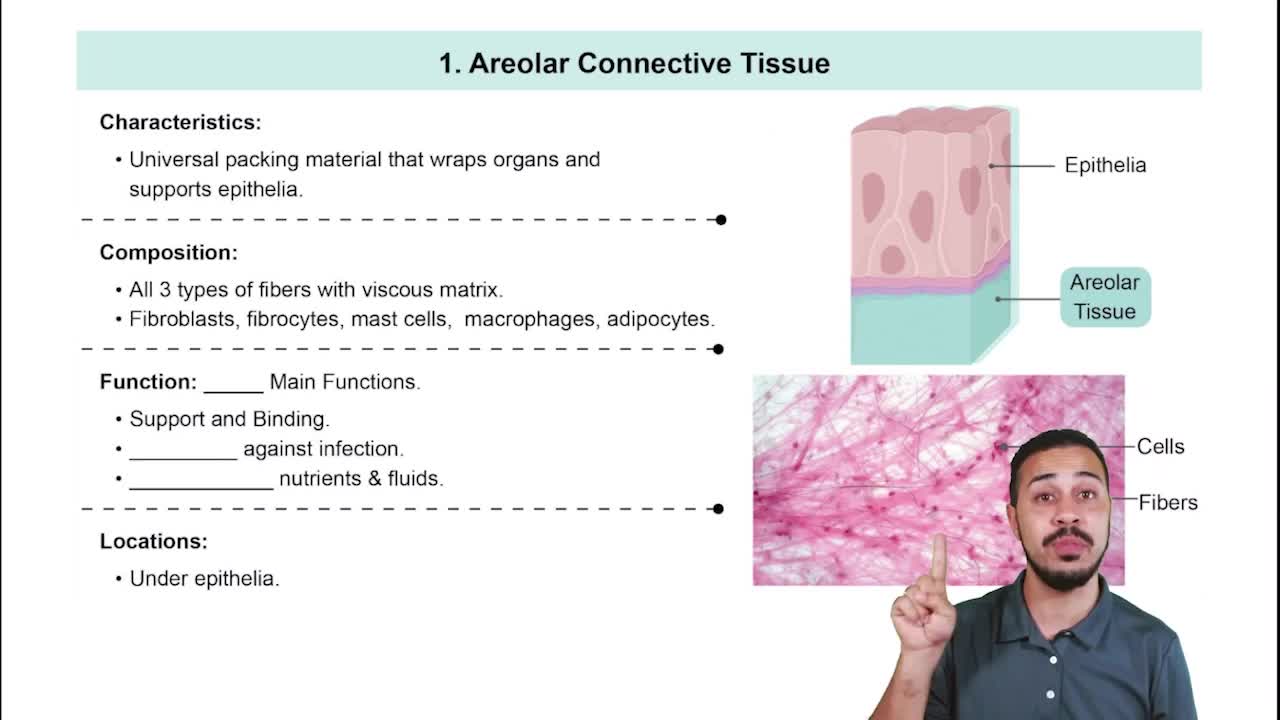
What kind of connective tissue acts as a sponge, soaking up fluid when edema occurs?
a. Areolar connective
b. Adipose connective
c. Dense irregular connective
d. Reticular connective
e. Vascular

검증된 단계별 안내
1
Step 1: Understand the concept of edema. Edema refers to the accumulation of excess fluid in tissues, often due to inflammation or injury. Connective tissues play a role in managing this fluid buildup.
Step 2: Review the properties of each connective tissue type listed in the options. Areolar connective tissue is known for its loose structure and ability to soak up excess fluid, acting like a sponge. Adipose connective tissue primarily stores fat and does not absorb fluid. Dense irregular connective tissue provides structural support but is not specialized for fluid absorption. Reticular connective tissue forms a supportive framework for organs but does not absorb fluid. Vascular tissue (blood) is involved in fluid transport but does not act as a sponge.
Step 3: Focus on the connective tissue that has a loose arrangement of fibers and abundant extracellular matrix, which allows it to absorb and hold fluid effectively. This description matches areolar connective tissue.
Step 4: Eliminate options that do not align with the function of soaking up fluid during edema. For example, adipose connective tissue and dense irregular connective tissue are not designed for fluid absorption.
Step 5: Conclude that areolar connective tissue is the primary type that acts as a sponge during edema, based on its structure and function.

비슷한 문제에 대한 검증된 영상 답변:

이 영상 해법은 위 문제에 도움이 된다고 튜터들이 추천한 것입니다.
영상 길이:
3m
도움이 되었나요?

주요 개념

질문에 올바르게 답하기 위해 반드시 이해해야 하는 핵심 개념들은 다음과 같습니다.

Areolar Connective Tissue

Areolar connective tissue is a loose connective tissue that provides support and elasticity to various organs. It contains a gel-like matrix with collagen and elastin fibers, allowing it to absorb excess fluid during edema. This property makes it crucial for maintaining tissue hydration and facilitating nutrient exchange.
추천 영상:
08:25
Areolar Connective Tissue

Edema

Edema refers to the accumulation of excess fluid in the interstitial spaces of tissues, leading to swelling. It can occur due to various factors, including inflammation, injury, or circulatory issues. Understanding edema is essential for recognizing how certain connective tissues, like areolar tissue, respond to fluid imbalances in the body.
추천 영상:
3:15
Glomerular Filtration Rate

Connective Tissue Types

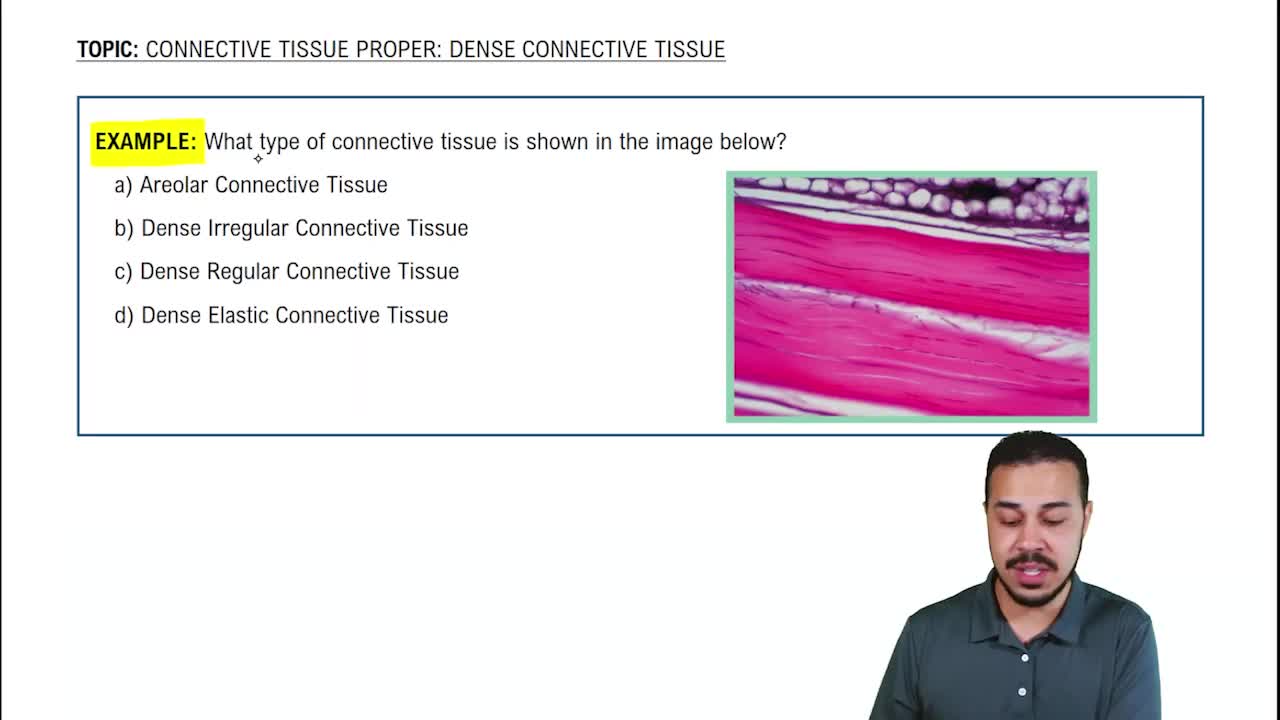
Connective tissues are classified into various types based on their structure and function, including loose and dense connective tissues. Each type serves different roles in the body, such as providing support, storing energy, or facilitating fluid movement. Recognizing these types helps in understanding their specific functions, particularly in pathological conditions like edema.
추천 영상:
01:49
Connective Tissue Proper: Dense Connective Tissue Example 1