Ch. 7 The Nervous System
Marieb - Essentials of Human Anatomy & Physiology 13th Edition
Marieb13th EditionEssentials of Human Anatomy & PhysiologyISBN: 9780135624340당신이 사용하는 게 아니라요?교과서 변경
7장, 문제 9

Cranial nerves that have some function in vision include the:
a. Trochlear
b. Trigeminal
c. Abducens
d. Facial.

검증된 단계별 안내
1
Step 1: Begin by recalling the primary functions of cranial nerves. Cranial nerves are numbered I through XII and have specific roles, such as sensory, motor, or mixed functions. Some cranial nerves are directly involved in vision or eye movement.
Step 2: Identify the cranial nerves listed in the options and their respective functions. For example: - Trochlear (CN IV): Controls the superior oblique muscle, which helps in eye movement. - Trigeminal (CN V): Primarily involved in facial sensation and mastication, not directly related to vision. - Abducens (CN VI): Controls the lateral rectus muscle, which moves the eye laterally. - Facial (CN VII): Primarily involved in facial expressions and taste, not directly related to vision.
Step 3: Focus on the cranial nerves that contribute to vision or eye movement. Vision-related functions include controlling eye muscles or transmitting visual information to the brain.
Step 4: Eliminate options that are not directly involved in vision. For example, the trigeminal nerve (CN V) and facial nerve (CN VII) do not have roles in vision or eye movement.
Step 5: Conclude that the trochlear nerve (CN IV) and abducens nerve (CN VI) are the correct answers because they are involved in controlling eye movement, which is essential for vision.

비슷한 문제에 대한 검증된 영상 답변:

이 영상 해법은 위 문제에 도움이 된다고 튜터들이 추천한 것입니다.
영상 길이:
3m
도움이 되었나요?

주요 개념

질문에 올바르게 답하기 위해 반드시 이해해야 하는 핵심 개념들은 다음과 같습니다.

Cranial Nerves

Cranial nerves are a set of twelve paired nerves that emerge directly from the brain, primarily responsible for motor and sensory functions of the head and neck. Each cranial nerve has specific roles, and understanding their functions is crucial for identifying which ones are involved in vision.
추천 영상:
가이드 코스
8:20
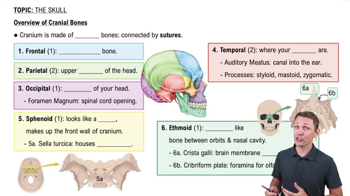
Overview of Cranial Bones

Vision-related Cranial Nerves

Several cranial nerves are directly involved in vision, including the optic nerve (II), which transmits visual information from the retina to the brain, and the oculomotor (III), trochlear (IV), and abducens (VI) nerves, which control eye movements. Recognizing these nerves is essential for answering questions about visual function.
추천 영상:
가이드 코스
8:20
Overview of Cranial Bones

Function of Specific Cranial Nerves

Each cranial nerve has distinct functions; for example, the trochlear nerve controls the superior oblique muscle, aiding in downward and lateral eye movement, while the abducens nerve controls lateral eye movement. Understanding these specific functions helps in determining which cranial nerves contribute to vision.
추천 영상:
가이드 코스
8:20
Overview of Cranial Bones