Ch. 9 The Endocrine System
Marieb - Essentials of Human Anatomy & Physiology 13th Edition
Marieb13th EditionEssentials of Human Anatomy & PhysiologyISBN: 9780135624340당신이 사용하는 게 아니라요?교과서 변경
9장, 문제 7

More than one choice may apply.
Hormones that regulate mineral (salt) levels include
a. Calcitonin
b. Aldosterone
c. Atrial natriuretic peptide
d. Glucagon

검증된 단계별 안내
1
Identify the hormones listed in the question and their primary functions in the body. For example, calcitonin is involved in calcium regulation, aldosterone regulates sodium and potassium levels, atrial natriuretic peptide (ANP) helps regulate blood pressure and sodium levels, and glucagon regulates blood glucose levels.
Focus on the hormones that are directly involved in mineral (salt) regulation. Minerals like sodium, potassium, and calcium are key electrolytes in the body, and their balance is critical for physiological functions.
Analyze calcitonin: This hormone is secreted by the thyroid gland and primarily regulates calcium levels in the blood, not sodium or potassium. Determine if it fits the criteria for regulating mineral (salt) levels.
Analyze aldosterone: This hormone is secreted by the adrenal cortex and plays a key role in regulating sodium and potassium levels by acting on the kidneys. It is directly involved in mineral (salt) regulation.
Analyze atrial natriuretic peptide (ANP): This hormone is secreted by the heart and helps regulate sodium levels by promoting its excretion in the urine, which also affects blood pressure. Determine if it fits the criteria for regulating mineral (salt) levels. Finally, analyze glucagon: This hormone is secreted by the pancreas and primarily regulates blood glucose levels, not mineral (salt) levels.

비슷한 문제에 대한 검증된 영상 답변:

이 영상 해법은 위 문제에 도움이 된다고 튜터들이 추천한 것입니다.
영상 길이:
2m
도움이 되었나요?

주요 개념

질문에 올바르게 답하기 위해 반드시 이해해야 하는 핵심 개념들은 다음과 같습니다.

Hormonal Regulation of Minerals

Hormones play a crucial role in maintaining mineral balance in the body, particularly sodium and potassium levels. They act on the kidneys and other organs to either promote the retention or excretion of these minerals, ensuring homeostasis. Understanding how these hormones function is essential for grasping their impact on overall health.
추천 영상:
가이드 코스
13:06
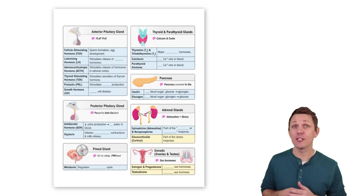
Review of Major Hormones

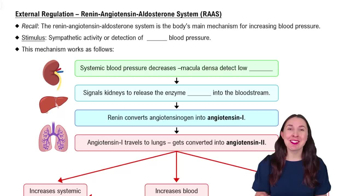
Aldosterone

Aldosterone is a steroid hormone produced by the adrenal glands that regulates sodium and potassium levels in the blood. It promotes sodium reabsorption in the kidneys, which helps to increase blood volume and blood pressure. Its role in fluid balance makes it a key player in mineral regulation.
추천 영상:
7:02
External Regulation – Renin-Angiotensin-Aldosterone Mechanism

Calcitonin and Atrial Natriuretic Peptide

Calcitonin is a hormone produced by the thyroid gland that helps lower blood calcium levels by inhibiting osteoclast activity and promoting calcium excretion in the kidneys. Atrial natriuretic peptide (ANP) is secreted by the heart and promotes sodium excretion, thus lowering blood pressure. Both hormones contribute to the regulation of mineral levels, albeit in different ways.
추천 영상:
2:45
Antimicrobial Peptides