Ch. 3 - Derivatives
3์žฅ, ๋ฌธ์ œ 3.23

Find the derivatives of the functions in Exercises 1โ€“42.


๐”‚ = xโปยน/ยฒ sec (2x)ยฒ

๊ฒ€์ฆ๋œ ๋‹จ๊ณ„๋ณ„ ์•ˆ๋‚ด
1
Identify the function components: The given function is ๐”‚ = x-1/2 sec((2x)2). This is a product of two functions: u(x) = x-1/2 and v(x) = sec((2x)2).
Apply the product rule: The derivative of a product of two functions u(x) and v(x) is given by (uv)' = u'v + uv'.
Differentiate u(x): The derivative of u(x) = x-1/2 is u'(x) = -1/2 * x-3/2.
Differentiate v(x): To find v'(x), use the chain rule. The derivative of sec(z) is sec(z)tan(z), where z = (2x)2. First, find the derivative of z with respect to x, which is dz/dx = 4x. Then, v'(x) = sec((2x)2)tan((2x)2) * 4x.
Combine the results: Substitute u(x), u'(x), v(x), and v'(x) into the product rule formula to find the derivative of ๐”‚. Simplify the expression to obtain the final derivative.

๋น„์Šทํ•œ ๋ฌธ์ œ์— ๋Œ€ํ•œ ๊ฒ€์ฆ๋œ ์˜์ƒ ๋‹ต๋ณ€:

์ด ์˜์ƒ ํ•ด๋ฒ•์€ ์œ„ ๋ฌธ์ œ์— ๋„์›€์ด ๋œ๋‹ค๊ณ  ํŠœํ„ฐ๋“ค์ด ์ถ”์ฒœํ•œ ๊ฒƒ์ž…๋‹ˆ๋‹ค.
์˜์ƒ ๊ธธ์ด:
3m
๋„์›€์ด ๋˜์—ˆ๋‚˜์š”?

์ฃผ์š” ๊ฐœ๋…

์งˆ๋ฌธ์— ์˜ฌ๋ฐ”๋ฅด๊ฒŒ ๋‹ตํ•˜๊ธฐ ์œ„ํ•ด ๋ฐ˜๋“œ์‹œ ์ดํ•ดํ•ด์•ผ ํ•˜๋Š” ํ•ต์‹ฌ ๊ฐœ๋…๋“ค์€ ๋‹ค์Œ๊ณผ ๊ฐ™์Šต๋‹ˆ๋‹ค.

Derivative Rules

Understanding the rules of differentiation, such as the product rule, quotient rule, and chain rule, is essential for finding derivatives of complex functions. The product rule is used when differentiating products of functions, while the chain rule is necessary for composite functions. Mastery of these rules allows for systematic and accurate differentiation.
์ถ”์ฒœ ์˜์ƒ:
5:50
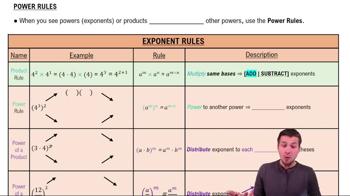
Power Rules

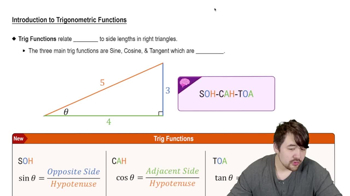
Trigonometric Functions

The function sec(2x) is a trigonometric function, specifically the secant function, which is the reciprocal of the cosine function. Knowing the derivatives of trigonometric functions, such as sec(x), is crucial for differentiating expressions involving them. The derivative of sec(x) is sec(x)tan(x), which will be applied in this context.
์ถ”์ฒœ ์˜์ƒ:
๊ฐ€์ด๋“œ ์ฝ”์Šค
6:04
Introduction to Trigonometric Functions

Power Rule

The power rule is a fundamental concept in calculus that states if f(x) = x^n, then f'(x) = n*x^(n-1). This rule is particularly useful for differentiating functions with exponents, such as x^(-1/2) in the given function. Applying the power rule correctly is vital for simplifying the differentiation process.
์ถ”์ฒœ ์˜์ƒ:
5:50
Power Rules
๊ด€๋ จ ์‹ค์ฒœ
๊ต๊ณผ์„œ ์งˆ๋ฌธ

Derivative Calculations


In Exercises 1โ€“8, given y = f(u) and u = g(x), find dy/dx = f'(g(x)) g'(x).


y = cos u, u = โˆ’x/3

263
views
๊ต๊ณผ์„œ ์งˆ๋ฌธ

Second Derivatives


Find y'' in Exercises 59โ€“64.


y = x(2x + 1)โด

202
views
๊ต๊ณผ์„œ ์งˆ๋ฌธ

Find the derivatives of the functions in Exercises 19โ€“40.


y = (4x + 3)โด(x + 1)โปยณ

221
views
๊ต๊ณผ์„œ ์งˆ๋ฌธ

Power Rule for negative integers Use the Derivative Quotient Rule to prove the Power Rule for negative integers, that is,

d/dx (xโปแต) = โˆ’mxโปแตโปยน

where m is a positive integer.

277
views
๊ต๊ณผ์„œ ์งˆ๋ฌธ

Find the derivatives of the functions in Exercises 1โ€“42.


๐”‚ = (x + 1)ยฒ (xยฒ + 2x)

203
views
๊ต๊ณผ์„œ ์งˆ๋ฌธ

The best quantity to order One of the formulas for inventory management says that the average weekly cost of ordering, paying for, and holding merchandise is

A(q) = (km / q) + cm + (hq / 2),

where q is the quantity you order when things run low (shoes, TVs, brooms, or whatever the item might be); k is the cost of placing an order (the same, no matter how often you order); c is the cost of one item (a constant); m is the number of items sold each week (a constant); and h is the weekly holding cost per item (a constant that takes into account things such as space, utilities, insurance, and security).

Find dA/dq and dยฒA/dqยฒ.

155
views