
교과서 질문
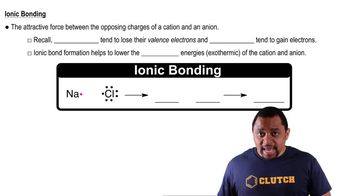
Silicon is the fundamental component of integrated circuits. Si has the same structure as diamond. (a) Is Si a molecular, metallic, ionic, or covalent-network solid?
354
views

 검증된 단계별 안내
 01:59
01:59
 01:49
01:49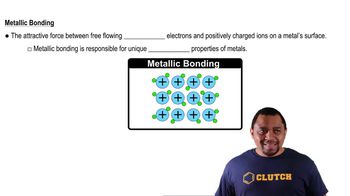 00:51
00:51Silicon is the fundamental component of integrated circuits. Si has the same structure as diamond. (a) Is Si a molecular, metallic, ionic, or covalent-network solid?
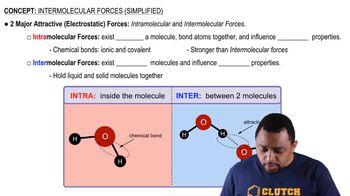
What kinds of attractive forces exist between particles (atoms, molecules, or ions) in (a) molecular crystals?
Which type (or types) of crystalline solid is characterized by each of the following? (a) High mobility of electrons throughout the solid;
Which type (or types) of crystalline solid is characterized by each of the following? (b) softness, relatively low melting point;
Silicon is the fundamental component of integrated circuits. Si has the same structure as diamond. (b) Silicon readily reacts to form silicon dioxide, SiO2, which is quite hard and is insoluble in water. Is SiO2 most likely a molecular, metallic, ionic, or covalent-network solid?
Which type (or types) of crystalline solid is characterized by each of the following? (c) high melting point and poor electrical conductivity;