Ch. 14 - Translation and Proteins
Klug - Concepts of Genetics 12th Edition
Klug12th EditionConcepts of GeneticsISBN: 9780135564776당신이 사용하는 게 아니라요?교과서 변경
14장, 문제 14

Early detection and adherence to a strict dietary regimen have prevented much of the intellectual disability that used to occur in those with phenylketonuria (PKU). Affected individuals now often lead normal lives and have families. For various reasons, such individuals tend to adhere less rigorously to their diet as they get older. Predict the effect that mothers with PKU who neglect their diets might have on newborns.

검증된 단계별 안내
1
Understand that phenylketonuria (PKU) is a genetic disorder caused by a deficiency in the enzyme phenylalanine hydroxylase, leading to the accumulation of phenylalanine in the body.
Recognize that high levels of phenylalanine are toxic to the brain and can cause intellectual disabilities if not managed through a strict diet low in phenylalanine.
Consider that during pregnancy, a mother with PKU who does not adhere to her dietary restrictions can have elevated levels of phenylalanine in her blood.
Realize that high maternal phenylalanine levels can cross the placenta and affect the developing fetus, potentially leading to congenital disabilities and intellectual disabilities in the newborn, a condition known as maternal PKU syndrome.
Conclude that it is crucial for mothers with PKU to maintain a strict diet before and during pregnancy to prevent adverse effects on their newborns.

비슷한 문제에 대한 검증된 영상 답변:

이 영상 해법은 위 문제에 도움이 된다고 튜터들이 추천한 것입니다.
영상 길이:
2m
도움이 되었나요?

주요 개념

질문에 올바르게 답하기 위해 반드시 이해해야 하는 핵심 개념들은 다음과 같습니다.

Phenylketonuria (PKU)

Phenylketonuria (PKU) is a genetic disorder caused by a deficiency in the enzyme phenylalanine hydroxylase, which is necessary for metabolizing the amino acid phenylalanine. When individuals with PKU consume foods high in phenylalanine, it accumulates in the body, leading to severe neurological damage and intellectual disabilities if not managed through a strict low-phenylalanine diet.

Maternal PKU and Teratogenic Effects

Maternal PKU refers to the condition where a woman with PKU becomes pregnant and does not adhere to her dietary restrictions. High levels of phenylalanine during pregnancy can cross the placenta, potentially leading to teratogenic effects on the developing fetus, including cognitive impairments, growth deficiencies, and other serious health issues.
추천 영상:
가이드 코스
03:38
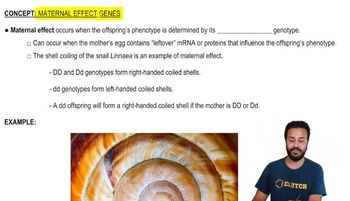
Maternal Effect

Dietary Management and Long-term Outcomes

Dietary management in PKU involves strict adherence to a low-phenylalanine diet, especially during critical periods such as pregnancy. Failure to maintain this diet can result in elevated phenylalanine levels, which can adversely affect both the mother's health and the newborn's development, leading to increased risks of intellectual disabilities and other complications.
추천 영상:
관련 실천
교과서 질문

The synthesis of flower pigments is known to be dependent on enzymatically controlled biosynthetic pathways. For the crosses shown here, postulate the role of mutant genes and their products in producing the observed phenotypes:

P₁: white × pink

F₁: all purple

F₂: 9/16 purple: 3/16 pink: 4/16 white

432
views
교과서 질문

The study of biochemical mutants in organisms such as Neurospora has demonstrated that some pathways are branched. The data shown in the following table illustrate the branched nature of the pathway resulting in the synthesis of thiamine:

Why don't the data support a linear pathway? Can you postulate a pathway for the synthesis of thiamine in Neurospora?

706
views
교과서 질문
Individuals with phenylketonuria cannot convert phenylalanine to tyrosine. Why don't these individuals exhibit a deficiency of tyrosine?
1096
views
교과서 질문

When a codon in an mRNA with the sequence 5'-UAA-3' enters the A site of a ribosome, it is not recognized by a tRNA with a complementary anticodon. Why not? What recognizes it instead?

1226
views
교과서 질문

The synthesis of flower pigments is known to be dependent on enzymatically controlled biosynthetic pathways. For the crosses shown here, postulate the role of mutant genes and their products in producing the observed phenotypes:

P₁: white strain A × white strain B

F₁: all purple

F₂: 9/16purple: 7/16 white

456
views
교과서 질문
Discuss the potential difficulties of designing a diet to alleviate the symptoms of phenylketonuria.
418
views