Ch. 26 - Population and Evolutionary Genetics
Klug - Concepts of Genetics  12th Edition
Klug12th EditionConcepts of Genetics ISBN: 9780135564776당신이 사용하는 게 아니라요?교과서 변경
26장, 문제 17

A recent study examining the mutation rates of 5669 mammalian genes (17,208 sequences) indicates that, contrary to popular belief, mutation rates among lineages with vastly different generation lengths and physiological attributes are remarkably constant [Kumar, S., and Subramanian, S. (2002). Proc. Natl. Acad. Sci. USA 99:803–808]. The average rate is estimated at 12.2×10⁻⁹ per bp per year. What is the significance of this finding in terms of mammalian evolution?

검증된 단계별 안내
1
Understand the context: The study reports a nearly constant mutation rate across diverse mammalian lineages, despite differences in generation length and physiology. Mutation rate here refers to the frequency at which changes in the DNA sequence occur per base pair (bp) per year.
Recall the molecular clock hypothesis: This hypothesis suggests that genetic mutations accumulate at a relatively constant rate over time, allowing us to estimate divergence times between species based on genetic differences.
Interpret the significance: A constant mutation rate across mammals implies that the molecular clock can be reliably used to estimate evolutionary timelines, even when species have different life histories or generation times.
Consider evolutionary implications: This finding suggests that mutation rates are more influenced by time rather than by factors like generation length or metabolic rate, which challenges previous assumptions about mutation rate variability.
Summarize the impact: The constancy of mutation rates supports the use of molecular data to reconstruct mammalian evolutionary history and provides a more robust framework for comparing genetic divergence across species.

비슷한 문제에 대한 검증된 영상 답변:

이 영상 해법은 위 문제에 도움이 된다고 튜터들이 추천한 것입니다.
영상 길이:
2m
도움이 되었나요?

주요 개념

질문에 올바르게 답하기 위해 반드시 이해해야 하는 핵심 개념들은 다음과 같습니다.

Molecular Clock Hypothesis

The molecular clock hypothesis proposes that genetic mutations accumulate at a relatively constant rate over time, allowing estimation of divergence times between species. This study supports the idea by showing consistent mutation rates across diverse mammals, suggesting a reliable molecular clock for evolutionary timelines.
추천 영상:
가이드 코스
03:13
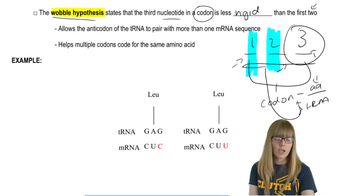
Translation:Wobble Hypothesis

Mutation Rate and Generation Time

Mutation rate is often thought to vary with generation length, as species with shorter generations might accumulate mutations faster. However, this finding challenges that assumption by demonstrating similar mutation rates regardless of generation time, implying other factors stabilize mutation rates across mammals.
추천 영상:
가이드 코스
09:49
Point Mutations

Implications for Mammalian Evolution

A constant mutation rate across mammals means evolutionary changes can be more accurately timed, improving phylogenetic analyses and understanding of species divergence. It also suggests evolutionary pressures or molecular mechanisms maintain mutation rates, influencing how genetic diversity and adaptation occur.
추천 영상:
관련 실천
교과서 질문

Describe how populations with substantial genetic differences can form. What is the role of natural selection?

825
views
교과서 질문

A farmer plants transgenic Bt corn that is genetically modified to produce its own insecticide. Of the corn borer larvae feeding on these Bt crop plants, only 10 percent survive unless they have at least one copy of the dominant resistance allele B that confers resistance to the Bt insecticide. When the farmer first plants Bt corn, the frequency of the B resistance allele in the corn borer population is 0.02. What will be the frequency of the resistance allele after one generation of corn borers have fed on Bt corn?

538
views
교과서 질문

One of the first Mendelian traits identified in humans was a dominant condition known as brachydactyly. This gene causes an abnormal shortening of the fingers or toes (or both). At the time, some researchers thought that the dominant trait would spread until 75 percent of the population would be affected (because the phenotypic ratio of dominant to recessive is 3 : 1). Show that the reasoning was incorrect.

588
views
교과서 질문

A botanist studying water lilies in an isolated pond observed three leaf shapes in the population: round, arrowhead, and scalloped. Marker analysis of DNA from 125 individuals showed the round-leaf plants to be homozygous for allele r1, while the plants with arrowhead leaves were homozygous for a different allele at the same locus, r2. Plants with scalloped leaves showed DNA profiles with both the r1 and r2 alleles. Frequency of the r1 allele was estimated at 0.81. If the botanist counted 20 plants with scalloped leaves in the pond, what is the inbreeding coefficient F for this population?

515
views
교과서 질문

What are considered significant factors in maintaining the surprisingly high levels of genetic variation in natural populations?

962
views
교과서 질문

Achondroplasia is a dominant trait that causes a characteristic form of dwarfism. In a survey of 50,000 births, five infants with achondroplasia were identified. Three of the affected infants had affected parents, while two had normal parents. Calculate the mutation rate for achondroplasia and express the rate as the number of mutant genes per given number of gametes.

830
views