Ch. 8 - Chromosome Mutations: Variation in Number and Arrangement
Klug - Concepts of Genetics 12th Edition
Klug12th EditionConcepts of GeneticsISBN: 9780135564776당신이 사용하는 게 아니라요?교과서 변경
8장, 문제 1a

How do we know that the extra chromosome causing Down syndrome is usually maternal in origin?

검증된 단계별 안내
1
Understand that Down syndrome is caused by trisomy 21, meaning there is an extra copy of chromosome 21 in the affected individual.
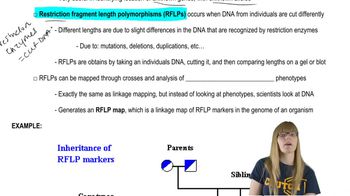
Recognize that to determine the origin of the extra chromosome, scientists analyze genetic markers called polymorphisms or short tandem repeats (STRs) on chromosome 21 from the child and both parents.
Collect DNA samples from the child with Down syndrome and both parents, then perform genotyping to identify which alleles (versions of a gene) are present on chromosome 21 in each individual.
Compare the child's alleles on chromosome 21 to those of the parents to see whether the extra chromosome 21 came from the mother or the father by identifying which parent's alleles are duplicated.
Review population studies that show a higher frequency of maternal nondisjunction events (errors in chromosome separation during meiosis) leading to the extra chromosome 21, thus concluding that the extra chromosome is usually maternal in origin.

비슷한 문제에 대한 검증된 영상 답변:

이 영상 해법은 위 문제에 도움이 된다고 튜터들이 추천한 것입니다.
영상 길이:
1m
도움이 되었나요?

주요 개념

질문에 올바르게 답하기 위해 반드시 이해해야 하는 핵심 개념들은 다음과 같습니다.

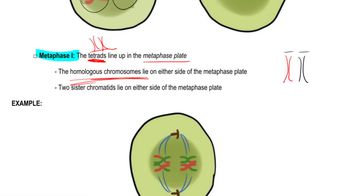
Nondisjunction during Meiosis

Nondisjunction is the failure of chromosome pairs to separate properly during meiosis, leading to gametes with an abnormal number of chromosomes. In Down syndrome, nondisjunction typically results in an extra copy of chromosome 21. Studying when and how nondisjunction occurs helps determine the parental origin of the extra chromosome.
추천 영상:

Parental Origin Analysis Using Genetic Markers

Genetic markers such as microsatellites or single nucleotide polymorphisms (SNPs) are used to trace the origin of chromosomes. By comparing the child's chromosome 21 markers with those of the mother and father, researchers can identify whether the extra chromosome came from the mother or father, revealing that most cases are maternal in origin.
추천 영상:
가이드 코스
07:11
Mapping with Markers

Maternal Age Effect

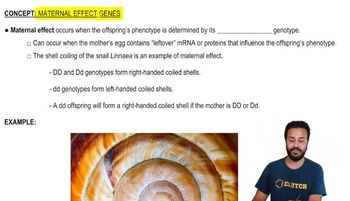
The risk of nondisjunction increases with maternal age, which correlates with the higher incidence of Down syndrome in children born to older mothers. This age-related increase supports the conclusion that the extra chromosome 21 usually originates from errors in the mother’s egg cells during meiosis.
추천 영상:
가이드 코스
03:38
Maternal Effect