Ch. 8 - Chromosome Mutations: Variation in Number and Arrangement
Klug - Concepts of Genetics 12th Edition
Klug12th EditionConcepts of GeneticsISBN: 9780135564776당신이 사용하는 게 아니라요?교과서 변경
8장, 문제 1c

How do we know that specific mutant phenotypes are due to changes in chromosome number or structure?

검증된 단계별 안내
1
Understand that mutant phenotypes caused by changes in chromosome number or structure are often identified through cytogenetic analysis, which involves examining the chromosomes under a microscope to detect abnormalities such as deletions, duplications, inversions, translocations, or aneuploidy.
Use karyotyping techniques to visualize the complete set of chromosomes from an individual and compare the chromosome number and structure to a normal reference to identify any deviations that correlate with the mutant phenotype.
Perform genetic mapping and linkage analysis to determine if the mutant phenotype co-segregates with known chromosomal rearrangements or aneuploid conditions, which helps establish a connection between the phenotype and chromosomal changes.
Apply molecular techniques such as fluorescence in situ hybridization (FISH) or comparative genomic hybridization (CGH) to detect specific structural changes or copy number variations in chromosomes that may underlie the mutant phenotype.
Correlate the observed chromosomal abnormalities with the mutant phenotype by studying multiple individuals or cell lines, ensuring that the phenotype consistently associates with the chromosomal change, thereby confirming causality.

비슷한 문제에 대한 검증된 영상 답변:

이 영상 해법은 위 문제에 도움이 된다고 튜터들이 추천한 것입니다.
영상 길이:
1m
도움이 되었나요?

주요 개념

질문에 올바르게 답하기 위해 반드시 이해해야 하는 핵심 개념들은 다음과 같습니다.

Chromosomal Aberrations

Chromosomal aberrations refer to changes in chromosome number or structure, such as deletions, duplications, inversions, translocations, or aneuploidy. These alterations can disrupt gene function or regulation, leading to mutant phenotypes. Identifying these aberrations helps link specific phenotypes to chromosomal changes.
추천 영상:
가이드 코스
08:42
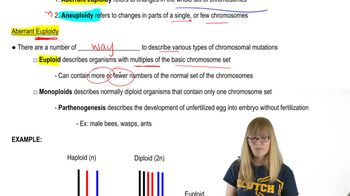
Aberrant Euploid

Karyotyping and Cytogenetic Analysis

Karyotyping is a laboratory technique that visualizes chromosomes under a microscope to detect numerical or structural abnormalities. Cytogenetic analysis allows researchers to correlate observed mutant phenotypes with specific chromosomal changes by comparing normal and mutant chromosome sets.
추천 영상:
가이드 코스
02:48
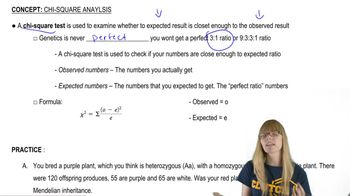
Chi Square Analysis

Genotype-Phenotype Correlation

Genotype-phenotype correlation involves linking specific genetic changes, such as chromosomal mutations, to observable traits or phenotypes. By studying inheritance patterns and molecular markers, scientists can determine if a mutant phenotype results from chromosomal alterations.
추천 영상:
가이드 코스
07:52
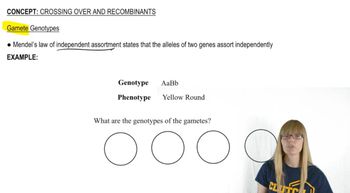
Gamete Genotypes