Ch. 1 - The Molecular Basis of Heredity, Variation, and Evolution
Sanders - Genetic Analysis: An Integrated Approach 3rd Edition
Sanders3rd EditionGenetic Analysis: An Integrated ApproachISBN: 9780135564172당신이 사용하는 게 아니라요?교과서 변경
1장, 문제 10h

Define each of the following terms:
Antiparallel

검증된 단계별 안내
1
The term 'antiparallel' is used to describe the orientation of the two strands of a DNA molecule in relation to each other.
In a DNA double helix, the two strands run in opposite directions. This means that one strand runs in the 5' to 3' direction, while the complementary strand runs in the 3' to 5' direction.
The 5' and 3' designations refer to the carbon atoms in the sugar molecule of the nucleotide. The 5' end has a phosphate group attached to the fifth carbon, and the 3' end has a hydroxyl group attached to the third carbon.
This antiparallel arrangement is crucial for the proper base pairing of nucleotides (adenine with thymine, and cytosine with guanine) and for the function of enzymes like DNA polymerase during replication.
Understanding the antiparallel nature of DNA is essential for studying processes such as DNA replication, transcription, and repair.

비슷한 문제에 대한 검증된 영상 답변:

이 영상 해법은 위 문제에 도움이 된다고 튜터들이 추천한 것입니다.
영상 길이:
40s
도움이 되었나요?

주요 개념

질문에 올바르게 답하기 위해 반드시 이해해야 하는 핵심 개념들은 다음과 같습니다.

Antiparallel Structure

Antiparallel refers to the orientation of two strands of DNA or RNA that run in opposite directions. In a DNA double helix, one strand runs from the 5' to 3' direction, while the complementary strand runs from 3' to 5'. This arrangement is crucial for the replication and transcription processes, as it allows for the proper pairing of nucleotides and the functioning of enzymes.
추천 영상:
가이드 코스
03:49
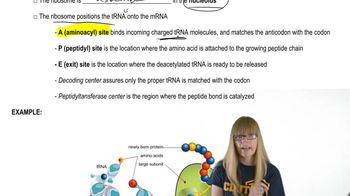
Ribosome Structure

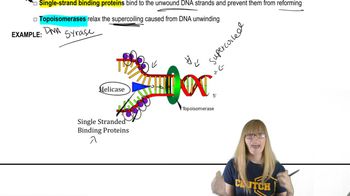
DNA Replication

DNA replication is the biological process by which a cell duplicates its DNA, ensuring that each new cell receives an exact copy of the genetic material. The antiparallel nature of the DNA strands is essential during replication, as DNA polymerases can only synthesize new strands in the 5' to 3' direction, leading to the formation of leading and lagging strands.
추천 영상:
가이드 코스
11:59
Steps to DNA Replication

Complementary Base Pairing

Complementary base pairing is the specific hydrogen bonding between nucleotide bases in DNA and RNA, where adenine pairs with thymine (or uracil in RNA) and cytosine pairs with guanine. This pairing is facilitated by the antiparallel orientation of the strands, ensuring that the genetic information is accurately maintained and transmitted during processes like replication and transcription.
추천 영상:
가이드 코스
03:49
Base Distortions