Ch. 1 - The Molecular Basis of Heredity, Variation, and Evolution
Sanders - Genetic Analysis: An Integrated Approach 3rd Edition
Sanders3rd EditionGenetic Analysis: An Integrated ApproachISBN: 9780135564172당신이 사용하는 게 아니라요?교과서 변경
1장, 문제 10g

Define each of the following terms:
Chromosome

검증된 단계별 안내
1
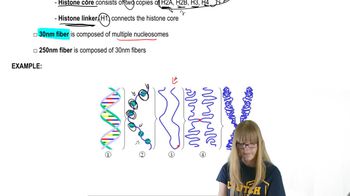
A chromosome is a thread-like structure composed of DNA and proteins, specifically histones, which help in packaging the DNA into a compact, organized form.
Chromosomes are located in the nucleus of eukaryotic cells and carry genetic information in the form of genes.
Each species has a specific number of chromosomes; for example, humans have 46 chromosomes arranged in 23 pairs.
Chromosomes play a critical role in cell division, ensuring that genetic material is accurately replicated and distributed to daughter cells.
In addition to nuclear chromosomes, some organisms, like bacteria, have circular chromosomes, and organelles like mitochondria and chloroplasts also contain their own small circular chromosomes.

비슷한 문제에 대한 검증된 영상 답변:

이 영상 해법은 위 문제에 도움이 된다고 튜터들이 추천한 것입니다.
영상 길이:
43s
도움이 되었나요?

주요 개념

질문에 올바르게 답하기 위해 반드시 이해해야 하는 핵심 개념들은 다음과 같습니다.

Chromosome Structure

A chromosome is a long, thread-like structure composed of DNA and proteins, which carries genetic information. In humans, chromosomes are organized into 23 pairs, with one set inherited from each parent. Each chromosome consists of a single DNA molecule that is tightly coiled and condensed, allowing it to fit within the nucleus of a cell.
추천 영상:
가이드 코스
07:10
Chromosome Structure

Chromosomal Function

Chromosomes play a crucial role in the storage and transmission of genetic information during cell division. They ensure that DNA is accurately replicated and distributed to daughter cells during mitosis and meiosis. This process is vital for growth, development, and reproduction, as it maintains the integrity of the organism's genetic material.
추천 영상:
가이드 코스
08:26
Functional Genomics

Chromosomal Abnormalities

Chromosomal abnormalities occur when there is a change in the number or structure of chromosomes, which can lead to genetic disorders. Examples include Down syndrome, caused by an extra copy of chromosome 21, and Turner syndrome, resulting from the absence of one X chromosome in females. Understanding these abnormalities is essential for diagnosing and studying genetic conditions.
추천 영상:
가이드 코스
07:10
Chromosome Structure