교과서 질문
Human chromosome 5 and the corresponding chromosomes from chimpanzee, gorilla, and orangutan are shown here. Describe any structural differences you see in the other primate chromosomes in relation to the human chromosome.
642
views

 Sanders 3rd EditionCh. 10 - Eukaryotic Chromosome Abnormalities and Molecular Organization문제 29b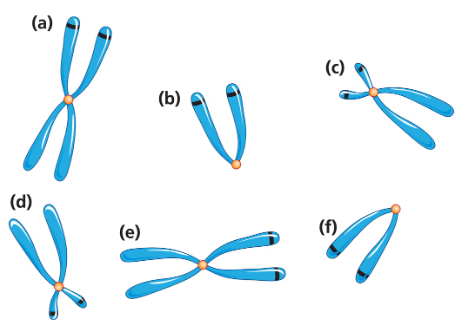
 검증된 단계별 안내
 07:10
07:10
 09:06 07:10
Human chromosome 5 and the corresponding chromosomes from chimpanzee, gorilla, and orangutan are shown here. Describe any structural differences you see in the other primate chromosomes in relation to the human chromosome.
A small population of deer living on an isolated island is separated for many generations from a mainland deer population. The populations retain the same number of chromosomes but hybrids are infertile. One chromosome (shown here) has a different banding pattern in the island population than in the mainland population.
In a mainland–island hybrid deer, recombination takes place in band q1 of the homologous chromosomes. Draw the gametes that result from this event.
For the following crosses, determine as accurately as possible the genotypes of each parent, the parent in whom nondisjunction occurs, and whether nondisjunction takes place in the first or second meiotic division. Both color blindness and hemophilia, a blood-clotting disorder, are X-linked recessive traits. In each case, assume the parents have normal karyotypes.
A man who is color blind and a woman who is wild type have a son with Jacob syndrome (XYY) who has hemophilia.
A eukaryote with a diploid number of 2n=6 carries the chromosomes shown below and labeled (a) to (f).
Carefully examine and redraw these chromosomes in any valid metaphase I alignment. Draw and label the metaphase plate, and label each chromosome with its assigned letter.
For the following crosses, determine as accurately as possible the genotypes of each parent, the parent in whom nondisjunction occurs, and whether nondisjunction takes place in the first or second meiotic division. Both color blindness and hemophilia, a blood-clotting disorder, are X-linked recessive traits. In each case, assume the parents have normal karyotypes.
A man and a woman who each has the wild-type phenotype have a son with Klinefelter syndrome (XXY) who has hemophilia.
A small population of deer living on an isolated island is separated for many generations from a mainland deer population. The populations retain the same number of chromosomes but hybrids are infertile. One chromosome (shown here) has a different banding pattern in the island population than in the mainland population.
Suppose that 40% of all meioses in mainland–island hybrids involve recombination somewhere in the chromosome region between q2.1 and p2. What proportion of the gametes of hybrid deer are viable? What is the cause of the decreased proportion of viable gametes in hybrids relative to the parental populations?