Ch. 10 - Eukaryotic Chromosome Abnormalities and Molecular Organization
Sanders - Genetic Analysis: An Integrated Approach 3rd Edition
Sanders3rd EditionGenetic Analysis: An Integrated ApproachISBN: 9780135564172당신이 사용하는 게 아니라요?교과서 변경
10장, 문제 3a

In eukaryotic DNA, where are you most likely to find histone protein H4?

검증된 단계별 안내
1
Understand that histone proteins, including H4, are part of the nucleosome structure in eukaryotic DNA. Nucleosomes are the basic units of chromatin, which help in DNA packaging.
Recall that a nucleosome consists of DNA wrapped around a core of histone proteins. This core is made up of two copies each of histones H2A, H2B, H3, and H4.
Recognize that histone H4 is one of the core histones and is located in the nucleosome core, where it interacts with DNA and other histones to stabilize the structure.
Note that histone H4 is specifically involved in forming the histone octamer and plays a role in the tight wrapping of DNA around the nucleosome.
Conclude that histone H4 is most likely to be found in the nucleosome core, tightly associated with DNA in eukaryotic chromatin.

비슷한 문제에 대한 검증된 영상 답변:

이 영상 해법은 위 문제에 도움이 된다고 튜터들이 추천한 것입니다.
영상 길이:
2m
도움이 되었나요?

주요 개념

질문에 올바르게 답하기 위해 반드시 이해해야 하는 핵심 개념들은 다음과 같습니다.

Eukaryotic DNA Structure

Eukaryotic DNA is organized into a complex structure known as chromatin, which consists of DNA wrapped around histone proteins. This organization allows for efficient packaging of DNA within the nucleus and plays a crucial role in gene regulation and expression.
추천 영상:

Histone Proteins

Histone proteins are a family of basic proteins that help package and order DNA into structural units called nucleosomes. Each nucleosome consists of a segment of DNA wound around a core of histone proteins, including H4, which is essential for maintaining the structural integrity of chromatin.
추천 영상:

Nucleosome Formation

Nucleosomes are the fundamental units of chromatin, formed by the wrapping of DNA around a histone octamer, which includes two copies of H2A, H2B, H3, and H4. This formation is critical for DNA compaction and regulation, as it influences access to genetic information during processes like transcription and replication.
추천 영상:
가이드 코스
04:06
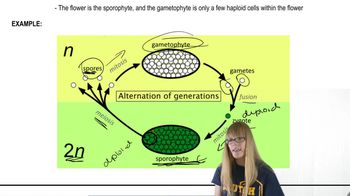
Formation of Plant Gametes