Ch. 11 - Gene Mutation, DNA Repair, and Homologous Recombination
Sanders - Genetic Analysis: An Integrated Approach 3rd Edition
Sanders3rd EditionGenetic Analysis: An Integrated ApproachISBN: 9780135564172당신이 사용하는 게 아니라요?교과서 변경
11장, 문제 7b

Researchers interested in studying mutation and mutation repair often induce mutations with various agents. What kinds of gene mutations are induced by
Radiation energy? Give two examples.

검증된 단계별 안내
1
Understand the concept of gene mutations: Gene mutations are changes in the nucleotide sequence of DNA. These mutations can be induced by external factors such as radiation energy, which causes damage to the DNA structure.
Learn about the types of radiation energy: Radiation energy can be classified into ionizing radiation (e.g., X-rays, gamma rays) and non-ionizing radiation (e.g., UV light). Both types can induce mutations in DNA.
Explore the effects of ionizing radiation: Ionizing radiation can cause double-strand breaks in DNA, leading to chromosomal rearrangements or deletions. It can also result in point mutations by altering individual nucleotides.
Examine the effects of non-ionizing radiation: UV light, a form of non-ionizing radiation, can induce the formation of pyrimidine dimers (e.g., thymine dimers). These dimers disrupt normal base pairing and replication, leading to mutations.
Summarize two examples of mutations induced by radiation energy: Example 1: Double-strand breaks caused by ionizing radiation. Example 2: Pyrimidine dimers caused by UV light. These mutations can lead to errors during DNA repair or replication.

비슷한 문제에 대한 검증된 영상 답변:

이 영상 해법은 위 문제에 도움이 된다고 튜터들이 추천한 것입니다.
영상 길이:
3m

주요 개념

질문에 올바르게 답하기 위해 반드시 이해해야 하는 핵심 개념들은 다음과 같습니다.

Types of Gene Mutations

Gene mutations can be classified into several types, including point mutations, insertions, deletions, and frameshift mutations. Point mutations involve a change in a single nucleotide, while insertions and deletions add or remove nucleotides, potentially altering the reading frame of the gene. Understanding these types is crucial for identifying how radiation can induce specific mutations.
추천 영상:
가이드 코스
10:48
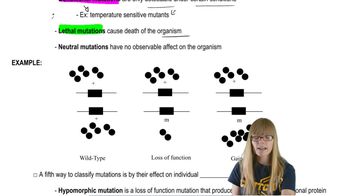
Mutations and Phenotypes

Mechanisms of Radiation-Induced Mutations

Radiation energy, such as ultraviolet (UV) light or ionizing radiation, can cause mutations by damaging the DNA structure. UV light can lead to the formation of pyrimidine dimers, which disrupt normal base pairing, while ionizing radiation can cause double-strand breaks. These alterations can result in various mutations if not properly repaired by cellular mechanisms.
추천 영상:
가이드 코스
04:29
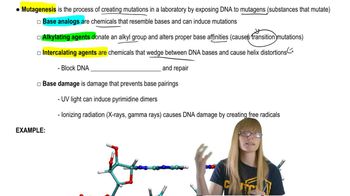
Induced Mutations

Mutation Repair Mechanisms

Cells have evolved several mechanisms to repair mutations, including nucleotide excision repair (NER) and homologous recombination. NER is particularly important for fixing UV-induced damage, while homologous recombination repairs double-strand breaks. Understanding these repair processes is essential for comprehending how cells maintain genetic stability despite exposure to mutagens like radiation.
추천 영상:
가이드 코스
05:44
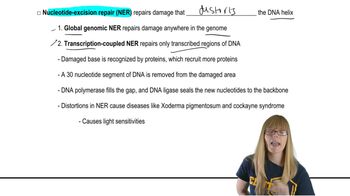
Repair Pathways