Ch. 12 - Regulation of Gene Expression in Bacteria and Bacteriophage
Sanders - Genetic Analysis: An Integrated Approach 3rd Edition
Sanders3rd EditionGenetic Analysis: An Integrated ApproachISBN: 9780135564172당신이 사용하는 게 아니라요?교과서 변경
12장, 문제 1

Bacterial genomes frequently contain groups of genes organized into operons. What is the biological advantage of operons to bacteria? Identify the regulatory components you would expect to find in an operon. How are the expressed genes of an operon usually arranged?

검증된 단계별 안내
1
Understand that an operon is a cluster of genes under the control of a single promoter and regulatory elements, allowing coordinated expression of genes with related functions.
Explain the biological advantage: operons enable bacteria to efficiently regulate multiple genes simultaneously, conserving energy by expressing genes only when needed.
Identify the key regulatory components of an operon, which typically include the promoter (where RNA polymerase binds), the operator (a DNA segment where repressors or activators bind), and structural genes (coding for proteins).
Describe how regulatory proteins such as repressors or activators interact with the operator to control transcription of the operon genes in response to environmental signals.
Note that the expressed genes in an operon are usually arranged sequentially and transcribed together into a single polycistronic mRNA, allowing coordinated translation of all gene products.

비슷한 문제에 대한 검증된 영상 답변:

이 영상 해법은 위 문제에 도움이 된다고 튜터들이 추천한 것입니다.
영상 길이:
1m

주요 개념

질문에 올바르게 답하기 위해 반드시 이해해야 하는 핵심 개념들은 다음과 같습니다.

Operons in Bacterial Genomes

An operon is a cluster of genes under the control of a single promoter and regulatory elements, allowing coordinated expression. This organization enables bacteria to efficiently regulate genes with related functions, often involved in the same metabolic pathway, ensuring resources are conserved and responses are rapid.
추천 영상:
가이드 코스
03:45
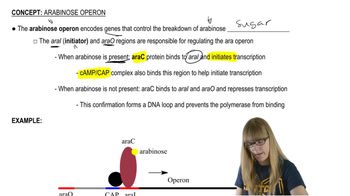
Arabinose Operon

Regulatory Components of an Operon

Key regulatory components of an operon include the promoter, where RNA polymerase binds to initiate transcription; the operator, a DNA segment where repressors or activators bind to control gene expression; and regulatory genes that produce these proteins. These elements work together to turn gene expression on or off in response to environmental signals.
추천 영상:
가이드 코스
03:45
Arabinose Operon

Gene Arrangement and Expression in Operons

Genes within an operon are typically arranged sequentially and transcribed together into a single polycistronic mRNA. This arrangement ensures that all genes involved in a specific function are expressed simultaneously and in the correct stoichiometric ratios, facilitating coordinated protein production.
추천 영상:
가이드 코스
02:09
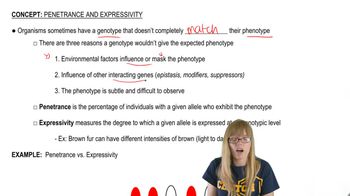
Penetrance and Expressivity