Ch. 12 - Regulation of Gene Expression in Bacteria and Bacteriophage
Sanders - Genetic Analysis: An Integrated Approach 3rd Edition
Sanders3rd EditionGenetic Analysis: An Integrated ApproachISBN: 9780135564172당신이 사용하는 게 아니라요?교과서 변경
12장, 문제 2b

Transcriptional regulation of operon gene expression involves the interaction of molecules with one another and of regulatory molecules with segments of DNA. In this context, define and give an example of each of the following:
Repressor

검증된 단계별 안내
1
Understand the concept of a repressor: A repressor is a regulatory protein that binds to specific DNA sequences, typically at the operator region of an operon, to inhibit transcription. This prevents RNA polymerase from transcribing the downstream genes.
Explain the mechanism of action: The repressor protein binds to the operator region of the operon. This binding physically blocks RNA polymerase from moving along the DNA, thereby preventing the transcription of the operon's genes.
Provide an example: In the lac operon of *E. coli*, the lac repressor protein binds to the operator region in the absence of lactose. This prevents the transcription of genes responsible for lactose metabolism.
Discuss the role of an inducer: In the lac operon example, when lactose (or its isomer allolactose) is present, it binds to the repressor protein. This causes a conformational change in the repressor, preventing it from binding to the operator and allowing transcription to proceed.
Summarize the importance: Repressors are crucial for regulating gene expression, ensuring that genes are only expressed when needed, which conserves cellular resources and allows for efficient adaptation to environmental changes.

비슷한 문제에 대한 검증된 영상 답변:

이 영상 해법은 위 문제에 도움이 된다고 튜터들이 추천한 것입니다.
영상 길이:
1m
도움이 되었나요?

주요 개념

질문에 올바르게 답하기 위해 반드시 이해해야 하는 핵심 개념들은 다음과 같습니다.

Repressor

A repressor is a type of regulatory protein that binds to specific DNA sequences, inhibiting the transcription of genes. By blocking RNA polymerase from accessing the promoter region, repressors prevent gene expression. An example is the lac repressor in the lac operon of E. coli, which binds to the operator region in the absence of lactose, preventing the transcription of genes involved in lactose metabolism.
추천 영상:

Operon

An operon is a cluster of genes under the control of a single promoter, allowing coordinated regulation of gene expression. Operons are common in prokaryotes and enable the efficient use of resources by expressing genes only when needed. The lac operon, for instance, contains genes that encode proteins for lactose utilization, which are expressed only when lactose is present and glucose is scarce.
추천 영상:
가이드 코스
03:45
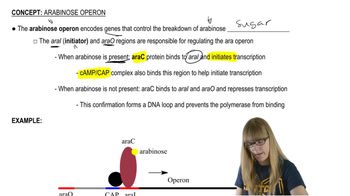
Arabinose Operon

Transcriptional Regulation

Transcriptional regulation refers to the mechanisms that control the rate of gene transcription, determining how much of a gene's product is made. This regulation can involve various factors, including repressors, activators, and the availability of transcription factors. It is crucial for cellular responses to environmental changes, allowing organisms to adapt by turning genes on or off as needed.
추천 영상:
가이드 코스
09:16
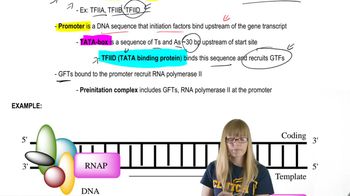
Eukaryotic Transcription