

Ch. 12 - Regulation of Gene Expression in Bacteria and Bacteriophage
Sanders - Genetic Analysis: An Integrated Approach 3rd Edition
Sanders3rd EditionGenetic Analysis: An Integrated ApproachISBN: 9780135564172당신이 사용하는 게 아니라요?교과서 변경
12장, 문제 11

Explain the circumstances under which attenuation of operon gene expression is advantageous to a bacterial organism. Would you expect attenuation to be found in a single-celled eukaryote? In a multicelled eukaryote?

검증된 단계별 안내
1
Understand the concept of attenuation: Attenuation is a regulatory mechanism used by bacteria to control gene expression, particularly in operons involved in amino acid biosynthesis, such as the trp operon in E. coli.
Identify the circumstances for attenuation: Attenuation is advantageous when a bacterial organism needs to quickly respond to changes in the availability of amino acids. It allows the organism to fine-tune gene expression based on the immediate needs for amino acid synthesis.
Consider the mechanism: In bacteria, attenuation involves the formation of a transcriptional terminator structure in the mRNA, which halts transcription when the end product (e.g., tryptophan) is abundant.
Evaluate the presence in single-celled eukaryotes: Attenuation is not typically found in single-celled eukaryotes because they have more complex regulatory mechanisms, such as alternative splicing and RNA interference, to control gene expression.
Assess the presence in multicelled eukaryotes: In multicelled eukaryotes, attenuation is unlikely to be a common mechanism due to the presence of even more sophisticated regulatory systems, including epigenetic modifications and extensive post-transcriptional regulation.

비슷한 문제에 대한 검증된 영상 답변:

이 영상 해법은 위 문제에 도움이 된다고 튜터들이 추천한 것입니다.
영상 길이:
2m
도움이 되었나요?

주요 개념

질문에 올바르게 답하기 위해 반드시 이해해야 하는 핵심 개념들은 다음과 같습니다.

Attenuation in Gene Regulation

Attenuation is a regulatory mechanism in prokaryotes, particularly in bacteria, that allows for the premature termination of transcription based on the availability of specific metabolites. This process enables bacteria to quickly adjust gene expression in response to environmental changes, optimizing resource use and energy efficiency.
추천 영상:
가이드 코스
09:11
Trp Attenuation

Operons

An operon is a cluster of genes under the control of a single promoter, allowing for coordinated expression of genes that often encode proteins with related functions. In bacteria, operons facilitate efficient regulation of metabolic pathways, enabling rapid responses to changes in nutrient availability or environmental conditions.
추천 영상:
가이드 코스
03:45
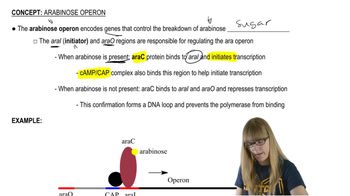
Arabinose Operon

Differences in Gene Regulation between Prokaryotes and Eukaryotes

Prokaryotes, such as bacteria, often utilize simpler and more direct mechanisms like attenuation for gene regulation, while eukaryotes have more complex regulatory systems involving multiple layers, including chromatin structure and RNA processing. Consequently, attenuation is generally not found in single-celled or multicellular eukaryotes, as their gene expression regulation is more intricate and does not rely on such mechanisms.
추천 영상:
가이드 코스
09:22
Review of Regulation