Ch. 14 - Analysis of Gene Function via Forward Genetics and Reverse Genetics
Sanders - Genetic Analysis: An Integrated Approach 3rd Edition
Sanders3rd EditionGenetic Analysis: An Integrated ApproachISBN: 9780135564172당신이 사용하는 게 아니라요?교과서 변경
14장, 문제 20

How would you design a genetic screen to find genes involved in meiosis?

검증된 단계별 안내
1
Define the objective of the genetic screen: The goal is to identify genes that are specifically involved in the process of meiosis. Meiosis is a specialized type of cell division that reduces the chromosome number by half, producing gametes or spores. Understanding this process requires isolating mutants that exhibit defects in meiosis.
Choose the model organism: Select an organism that is well-suited for genetic studies, such as yeast (e.g., *Saccharomyces cerevisiae*), fruit flies (*Drosophila melanogaster*), or mice. The choice depends on the experimental tools available and the relevance of the organism to the study of meiosis.
Generate mutants: Use a mutagen (e.g., chemical mutagens like EMS, radiation, or transposon insertion) to induce random mutations in the genome of the model organism. This creates a population of individuals with diverse genetic alterations.
Screen for meiotic defects: Develop a screening method to identify mutants with defects in meiosis. For example, in yeast, you could look for mutants that fail to produce viable spores. In other organisms, you might examine gamete production, chromosome segregation, or fertility as indicators of meiotic function.
Map and identify the mutated genes: Once mutants with meiotic defects are isolated, use genetic mapping, whole-genome sequencing, or complementation tests to identify the specific genes that are disrupted. These genes are candidates for being involved in meiosis.

비슷한 문제에 대한 검증된 영상 답변:

이 영상 해법은 위 문제에 도움이 된다고 튜터들이 추천한 것입니다.
영상 길이:
3m
도움이 되었나요?

주요 개념

질문에 올바르게 답하기 위해 반드시 이해해야 하는 핵심 개념들은 다음과 같습니다.

Meiosis

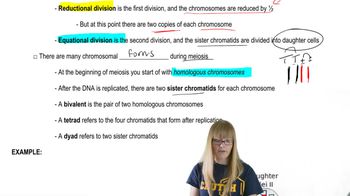
Meiosis is a specialized form of cell division that reduces the chromosome number by half, resulting in the formation of gametes (sperm and eggs). It consists of two sequential divisions: meiosis I and meiosis II, which include processes such as homologous recombination and independent assortment. Understanding meiosis is crucial for identifying genes that regulate this process and contribute to genetic diversity.
추천 영상:
가이드 코스
05:30
Meiosis Overview

Genetic Screening

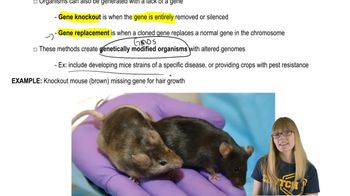
Genetic screening is a method used to identify and analyze specific genes or mutations associated with particular traits or biological processes. In the context of meiosis, a genetic screen could involve mutagenesis or RNA interference to disrupt gene function, followed by phenotypic analysis to observe effects on meiotic progression. This approach helps pinpoint genes that are essential for successful meiosis.
추천 영상:
가이드 코스
03:45
Descriptive Genetics

Model Organisms

Model organisms, such as yeast, fruit flies, and mice, are widely used in genetic research due to their well-characterized genomes and ease of manipulation. They provide valuable insights into genetic functions and processes, including meiosis. By designing genetic screens in these organisms, researchers can uncover conserved genes and pathways that are critical for meiotic function across species.
추천 영상:
가이드 코스
09:12
Transgenic Organisms and Gene Therapy
관련 실천
교과서 질문

The eyes of Drosophila develop from imaginal discs, groups of cells set aside in the fly embryo that differentiate into the adult structures during the pupal stage. Despite their importance in nature, eyes are dispensable for fruit fly life in the laboratory.

What complications might arise from genetic screens targeting an organ that differentiates late in development?

411
views
교과서 질문

In enhancer trapping experiments, a minimal promoter and a reporter gene are placed adjacent to the end of a transposon so that genomic enhancers adjacent to the insertion site can act to drive expression of the reporter gene. In a modification of this approach, a series of enhancers and a promoter can be placed at the end of a transposon so that transcription is activated from the transposon into adjacent genomic DNA. What types of mutations do you expect to be induced by such a transposon in a mutagenesis experiment?

634
views
교과서 질문

Given your knowledge of the genetic tools for studying Drosophila, outline a method by which you could clone the dunce and rutabaga genes identified by Seymour Benzer's laboratory in the genetic screen.

522
views
교과서 질문

We designed a screen to identify conditional mutants of S. cerevisiae in which the secretory system was defective. Suppose we were successful in identifying 12 mutants.

Describe the crosses you would perform to determine the number of different genes represented by the 12 mutations.

457
views
교과서 질문

We designed a screen to identify conditional mutants of S. cerevisiae in which the secretory system was defective. Suppose we were successful in identifying 12 mutants.

Based on your knowledge of the genetic tools for studying baker's yeast, how would you clone the genes that are mutated in your respective yeast strains? What is an approach to cloning the human orthologs of the yeast genes?

485
views
교과서 질문

The eyes of Drosophila develop from imaginal discs, groups of cells set aside in the fly embryo that differentiate into the adult structures during the pupal stage. Despite their importance in nature, eyes are dispensable for fruit fly life in the laboratory.

Devise a genetic screen to identify genes directing the development of the fly eye.

466
views