Ch. 15 - Recombinant DNA Technology and Its Applications
Sanders - Genetic Analysis: An Integrated Approach 3rd Edition
Sanders3rd EditionGenetic Analysis: An Integrated ApproachISBN: 9780135564172당신이 사용하는 게 아니라요?교과서 변경
15장, 문제 33

Describe how having the Cas9 gene at a genomic locus unlinked to the guide RNA and target site locus in an engineered gene drive system could slow the propagation of the gene drive allele in a population into which a small number of individuals carrying both the gene drive allele and the Cas9 locus are released.

검증된 단계별 안내
1
Understand the concept of a gene drive system: A gene drive is a genetic engineering technology designed to spread a specific allele through a population by biasing inheritance. It typically involves a guide RNA (gRNA) and the Cas9 protein, which together target and edit specific DNA sequences.
Recognize the importance of linkage: In a gene drive system, the Cas9 gene and the guide RNA are often linked to the target site locus to ensure efficient propagation of the gene drive allele. If these components are unlinked, their inheritance becomes independent, which can affect the system's efficiency.
Analyze the scenario: When the Cas9 gene is located at a genomic locus unlinked to the guide RNA and target site locus, individuals in the population may inherit the Cas9 gene without inheriting the guide RNA or the target site locus. This disrupts the coordinated action required for the gene drive to function effectively.
Consider the impact on propagation: Without the linkage, the Cas9 protein may not encounter the guide RNA or the target site in the same individual, reducing the likelihood of successful editing and propagation of the gene drive allele. This slows the spread of the gene drive allele through the population.
Evaluate population dynamics: Over generations, the unlinked Cas9 gene and guide RNA may segregate further due to independent assortment during meiosis. This segregation reduces the efficiency of the gene drive system, as fewer individuals will carry both components necessary for the gene drive to operate.

비슷한 문제에 대한 검증된 영상 답변:

이 영상 해법은 위 문제에 도움이 된다고 튜터들이 추천한 것입니다.
영상 길이:
4m
도움이 되었나요?

주요 개념

질문에 올바르게 답하기 위해 반드시 이해해야 하는 핵심 개념들은 다음과 같습니다.

Gene Drive Systems

Gene drive systems are genetic engineering technologies that promote the inheritance of a particular gene to increase its prevalence in a population. They often utilize CRISPR-Cas9 technology to edit genes in a way that biases inheritance, allowing engineered traits to spread rapidly through generations. Understanding how these systems work is crucial for analyzing their potential impacts on ecosystems and populations.
추천 영상:

CRISPR-Cas9 Mechanism

CRISPR-Cas9 is a revolutionary gene-editing tool that allows for precise modifications of DNA. The Cas9 protein acts as molecular scissors that cut DNA at specific locations, guided by a complementary RNA sequence. This mechanism is essential for understanding how gene drives can be engineered and how they interact with target loci in the genome.
추천 영상:

Genomic Locus and Allelic Interaction

A genomic locus refers to a specific, fixed position on a chromosome where a particular gene or genetic marker is located. In the context of gene drives, the interaction between the Cas9 gene at a separate locus and the target site can influence the efficiency of gene drive propagation. If the Cas9 is unlinked, it may lead to reduced editing efficiency, thereby slowing the spread of the gene drive allele in the population.
추천 영상:
가이드 코스
07:56
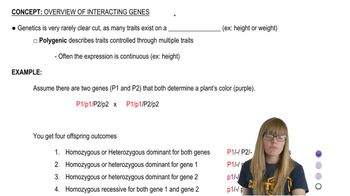
Interacting Genes Overview