Ch. 15 - Recombinant DNA Technology and Its Applications
Sanders - Genetic Analysis: An Integrated Approach 3rd Edition
Sanders3rd EditionGenetic Analysis: An Integrated ApproachISBN: 9780135564172당신이 사용하는 게 아니라요?교과서 변경
15장, 문제 1

What purpose do the bla and lacZ genes serve in the plasmid vector pUC18?

검증된 단계별 안내
1
Understand that plasmid vectors like pUC18 are used in molecular cloning to carry foreign DNA into host cells and allow for selection and identification of successful clones.
Recognize that the bla gene in pUC18 encodes the enzyme beta-lactamase, which provides resistance to the antibiotic ampicillin, allowing for selection of bacteria that have taken up the plasmid.
Know that the lacZ gene encodes the enzyme beta-galactosidase, which can cleave substrates like X-gal to produce a blue color, enabling blue-white screening to distinguish recombinant plasmids from non-recombinant ones.
Understand that insertion of foreign DNA into the multiple cloning site within the lacZ gene disrupts its function, so colonies with recombinant plasmids remain white, while those with non-recombinant plasmids turn blue on X-gal plates.
Summarize that bla allows for antibiotic selection, and lacZ enables visual screening of recombinant clones, both essential for efficient identification of successful cloning events using pUC18.

비슷한 문제에 대한 검증된 영상 답변:

이 영상 해법은 위 문제에 도움이 된다고 튜터들이 추천한 것입니다.
영상 길이:
1m
도움이 되었나요?

주요 개념

질문에 올바르게 답하기 위해 반드시 이해해야 하는 핵심 개념들은 다음과 같습니다.

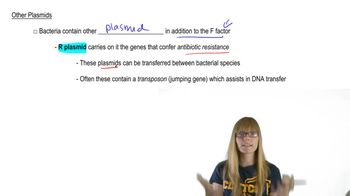
Plasmid Vectors

Plasmid vectors are circular DNA molecules used to carry foreign genes into host cells. They contain essential elements like an origin of replication and selectable markers, enabling replication and identification of transformed cells.
추천 영상:

bla Gene (Beta-lactamase)

The bla gene encodes beta-lactamase, an enzyme that provides resistance to ampicillin. In plasmid vectors like pUC18, it serves as a selectable marker, allowing only bacteria that have taken up the plasmid to grow in the presence of ampicillin.
추천 영상:

lacZ Gene and Blue-White Screening

The lacZ gene encodes beta-galactosidase, which cleaves X-gal to produce a blue color. In pUC18, disruption of lacZ by inserted DNA prevents blue color formation, enabling blue-white screening to distinguish recombinant (white) from non-recombinant (blue) colonies.
추천 영상:
가이드 코스
10:05
Morgan's Eye Color Fruit Fly Cross