Ch. 16 - Genomics: Genetics from a Whole-Genome Perspective
Sanders - Genetic Analysis: An Integrated Approach 3rd Edition
Sanders3rd EditionGenetic Analysis: An Integrated ApproachISBN: 9780135564172당신이 사용하는 게 아니라요?교과서 변경
16장, 문제 B.14a

Select one of the hereditary conditions from either the RUSP core conditions list or the RUSP list of secondary conditions and do some online research to find the following information: The frequency of the condition in newborn infants (note any populations in which the condition is more frequent)

검증된 단계별 안내
1
Choose a hereditary condition from the RUSP (Recommended Uniform Screening Panel) core or secondary conditions list, such as Phenylketonuria (PKU) or Cystic Fibrosis.
Research reputable sources such as the Centers for Disease Control and Prevention (CDC), National Institutes of Health (NIH), or peer-reviewed articles to find the frequency of the chosen condition in newborn infants.
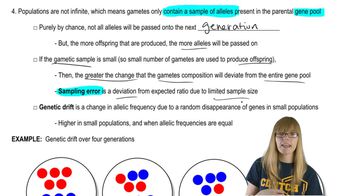
Identify and note any specific populations or ethnic groups where the condition has a higher prevalence, as some genetic disorders are more common in certain populations due to founder effects or genetic drift.
Summarize the frequency data, typically expressed as the number of affected newborns per number of births (e.g., 1 in 10,000), and include any relevant demographic details.
Ensure to cross-check multiple sources to confirm the accuracy of the frequency information and understand any variations reported.

비슷한 문제에 대한 검증된 영상 답변:

이 영상 해법은 위 문제에 도움이 된다고 튜터들이 추천한 것입니다.
영상 길이:
1m
도움이 되었나요?

주요 개념

질문에 올바르게 답하기 위해 반드시 이해해야 하는 핵심 개념들은 다음과 같습니다.

Newborn Screening and the RUSP

The Recommended Uniform Screening Panel (RUSP) is a list of conditions that newborns are routinely screened for in the United States. It includes core and secondary conditions chosen based on their health impact and the availability of effective treatments. Understanding RUSP helps identify which hereditary conditions are prioritized for early detection.
추천 영상:
가이드 코스
09:32
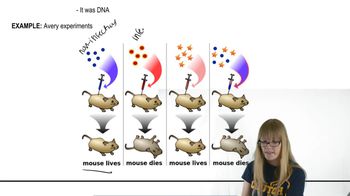
History and Experiments

Frequency and Prevalence of Genetic Conditions

Frequency refers to how often a condition occurs in a specific population, often expressed as cases per number of births. Prevalence can vary by ethnicity, geography, or other demographic factors. Knowing frequency helps assess the public health impact and guides screening priorities.
추천 영상:

Hereditary Conditions and Genetic Inheritance

Hereditary conditions are genetic disorders passed from parents to offspring through genes. These conditions can follow different inheritance patterns such as autosomal dominant, autosomal recessive, or X-linked. Understanding inheritance helps explain why certain populations may have higher frequencies of specific conditions.
추천 영상:
가이드 코스
27:36
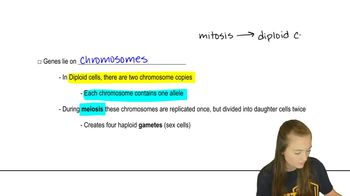
Diploid Genetics
관련 실천
교과서 질문

Select one of the hereditary conditions from either the RUSP core conditions list or the RUSP list of secondary conditions and do some online research to find the following information:

The recommended treatment for those with the condition.

447
views
교과서 질문

Go to http://blast.ncbi.nlm.nih.gov/Blast.cgi and follow the links to nucleotide BLAST. Type in the sequence below; it is broken up into codons to make it easier to copy.

5' ATG TTC GTC AAT CAG CAC CTT TGT GGT TCT CAC CTC GTT GAA GCTTTG TAC CTT GTT TGC GGT GAA CGT GGT TTC TTC TAC ACT CCT AAG ACT TAA 3'

As you will note on the BLAST page, there are several options for tailoring your query to obtain the most relevant information. Some are related to which sequences to search in the database. For example, the search can be limited taxonomically (e.g., restricted to mammals) or by the type of sequences in the database (e.g., cDNA or genomic). For our search, we will use the broadest database, the 'Nucleotide collection (nr/nt).' This is the nonredundant (nr) database of all nucleotide data (nt) in GenBank and can be selected in the 'Database' dialogue box. Other parameters can also be adjusted to make the search more or less sensitive to mismatches or gaps. For our purposes, we will use the default setting, which is automatically presented. Press 'BLAST' to search. What can you say about the DNA sequence?

429
views
교과서 질문

Select one of the hereditary conditions from either the RUSP core conditions list or the RUSP list of secondary conditions and do some online research to find the following information:

The duration of treatment

582
views
교과서 질문

Select one of the hereditary conditions from either the RUSP core conditions list or the RUSP list of secondary conditions and do some online research to find the following information:

The symptoms and consequences of the condition if it is not treated.

512
views
교과서 질문

Select one of the hereditary conditions from either the RUSP core conditions list or the RUSP list of secondary conditions and do some online research to find the following information:

The defect that characterizes the condition.

400
views
교과서 질문

Select one of the hereditary conditions from either the RUSP core conditions list or the RUSP list of secondary conditions and do some online research to find the following information:

The anticipated outcome if treatment is applied

511
views