
교과서 질문
Determine whether the statements below are true or false. If a statement is false, provide the correct information or revise the statement to make it correct.
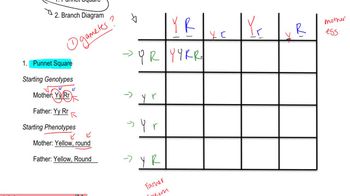
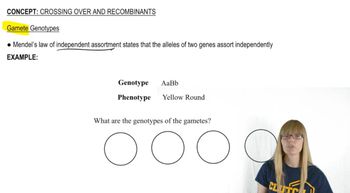
The outcome of a trihybrid cross is predicted by the law of segregation.
526
views

 검증된 단계별 안내
 15:24
15:24
 07:52
07:52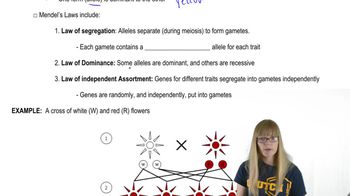 05:48
05:48Determine whether the statements below are true or false. If a statement is false, provide the correct information or revise the statement to make it correct.
The outcome of a trihybrid cross is predicted by the law of segregation.
If a chi-square test produces a chi-square value of 7.83 with 4 degrees of freedom,
Above what chi-square value would you reject the chance hypothesis for an experiment with 7 degrees of freedom?
If a chi-square test produces a chi-square value of 7.83 with 4 degrees of freedom,
In what interval range does the P value fall?
Determine whether the statements below are true or false. If a statement is false, provide the correct information or revise the statement to make it correct.
A student uses the product rule to predict that the probability of flipping a coin twice and getting a head and then a tail is 1/4.
If a chi-square test produces a chi-square value of 7.83 with 4 degrees of freedom,
Is the result sufficient to reject the chance hypothesis?
Determine whether the statements below are true or false. If a statement is false, provide the correct information or revise the statement to make it correct.
A test cross between a heterozygous parent and a homozygous recessive parent is expected to produce a 1:1 genotypic and phenotypic ratio.