Ch. 6 - Genetic Analysis and Mapping in Bacteria and Bacteriophages
Sanders - Genetic Analysis: An Integrated Approach 3rd Edition
Sanders3rd EditionGenetic Analysis: An Integrated ApproachISBN: 9780135564172당신이 사용하는 게 아니라요?교과서 변경
6장, 문제 6

Describe the difference between the bacteriophage lytic cycle and lysogenic cycle.

검증된 단계별 안내
1
Understand that bacteriophages are viruses that infect bacteria, and they can follow two distinct life cycles: the lytic cycle and the lysogenic cycle.
In the lytic cycle, the bacteriophage attaches to the bacterial cell, injects its genetic material, and uses the host's cellular machinery to replicate its DNA and produce new viral particles. This process ultimately leads to the lysis (bursting) of the bacterial cell, releasing the new phages.
In the lysogenic cycle, the bacteriophage integrates its genetic material into the bacterial host's genome, forming a prophage. The viral DNA remains dormant and is replicated along with the host's DNA during cell division, without causing immediate harm to the host.
Recognize that environmental factors, such as stress or UV radiation, can trigger the prophage in the lysogenic cycle to exit the host genome and enter the lytic cycle, leading to active replication and cell lysis.
Summarize the key difference: the lytic cycle results in the destruction of the host cell and immediate production of new viruses, while the lysogenic cycle involves integration of viral DNA into the host genome and a dormant phase before potentially transitioning to the lytic cycle.

비슷한 문제에 대한 검증된 영상 답변:

이 영상 해법은 위 문제에 도움이 된다고 튜터들이 추천한 것입니다.
영상 길이:
2m
도움이 되었나요?

주요 개념

질문에 올바르게 답하기 위해 반드시 이해해야 하는 핵심 개념들은 다음과 같습니다.

Bacteriophage Structure and Function

Bacteriophages, or phages, are viruses that specifically infect bacteria. They consist of genetic material (DNA or RNA) encased in a protein coat. Understanding their structure is crucial for comprehending how they interact with bacterial cells during the lytic and lysogenic cycles.
추천 영상:
가이드 코스
06:04
Mapping Bacteriophages

Lytic Cycle

The lytic cycle is a viral reproductive process where the bacteriophage infects a bacterial cell, hijacks its machinery to replicate its own genetic material, and ultimately causes the cell to burst (lyse), releasing new phage particles. This cycle results in the immediate destruction of the host cell.
추천 영상:
가이드 코스
08:04
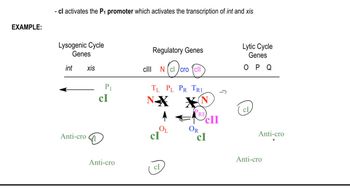
Decision Between Lytic and Lysogenic Cycles

Lysogenic Cycle

In contrast, the lysogenic cycle involves the integration of the phage's genetic material into the bacterial genome, forming a prophage. This allows the phage to replicate along with the bacterial DNA without killing the host. The lysogenic cycle can switch to the lytic cycle under certain conditions, leading to cell lysis.
추천 영상:
가이드 코스
08:04
Decision Between Lytic and Lysogenic Cycles