Ch. 7 - DNA Structure and Replication
Sanders - Genetic Analysis: An Integrated Approach 3rd Edition
Sanders3rd EditionGenetic Analysis: An Integrated ApproachISBN: 9780135564172당신이 사용하는 게 아니라요?교과서 변경
7장, 문제 21

Raymond Rodriguez and colleagues demonstrated conclusively that DNA replication in E. coli is bidirectional. Explain why locating the origin of replication on one side of the circular chromosomes and the terminus of replication on the opposite side of the chromosome supported this conclusion.

검증된 단계별 안내
1
Understand the structure of the E. coli chromosome: It is a circular DNA molecule, meaning that replication can proceed in either one or two directions from the origin of replication (OriC).
Recall the concept of bidirectional replication: In bidirectional replication, DNA synthesis occurs in two opposite directions from the origin of replication, eventually meeting at the terminus of replication.
Consider the experimental setup: Raymond Rodriguez and colleagues identified the origin of replication (OriC) on one side of the circular chromosome and the terminus of replication (Ter) on the opposite side.
Analyze the implications of the findings: If replication were unidirectional, the replication fork would travel around the entire chromosome in one direction, taking longer to reach the terminus. However, the observed replication pattern showed that replication forks moved in opposite directions, meeting at the terminus, which is consistent with bidirectional replication.
Conclude the reasoning: The placement of the origin and terminus on opposite sides of the chromosome, combined with the observation of replication forks moving in both directions, provided strong evidence that DNA replication in E. coli is bidirectional.

비슷한 문제에 대한 검증된 영상 답변:

이 영상 해법은 위 문제에 도움이 된다고 튜터들이 추천한 것입니다.
영상 길이:
1m
도움이 되었나요?

주요 개념

질문에 올바르게 답하기 위해 반드시 이해해야 하는 핵심 개념들은 다음과 같습니다.

Bidirectional DNA Replication

Bidirectional DNA replication refers to the process where DNA strands are synthesized in two opposite directions from a single origin of replication. In prokaryotes like E. coli, this means that replication forks move away from the origin towards the terminus, allowing for efficient and rapid duplication of the circular chromosome.
추천 영상:
가이드 코스
11:59
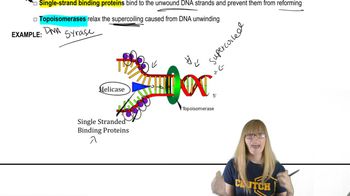
Steps to DNA Replication

Origin and Terminus of Replication

The origin of replication is the specific location on the DNA where replication begins, while the terminus is the point where replication ends. In E. coli, the positioning of these sites on opposite sides of the circular chromosome indicates that replication occurs simultaneously in both directions, reinforcing the bidirectional nature of the process.
추천 영상:
가이드 코스
14:31
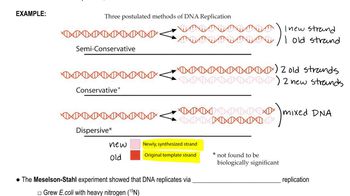
Semiconservative Replication

Circular Chromosome Structure

E. coli possesses a circular chromosome, which allows for a unique replication mechanism. The circular structure means that once replication reaches the terminus, the two newly synthesized DNA strands can be separated efficiently, completing the replication process without the complications that linear chromosomes face, such as end replication problems.
추천 영상:
가이드 코스
07:10
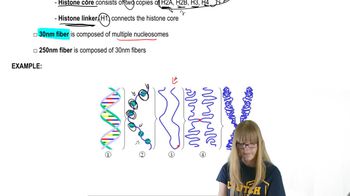
Chromosome Structure
관련 실천