Ch. 8 - Molecular Biology of Transcription and RNA Processing
Sanders - Genetic Analysis: An Integrated Approach 3rd Edition
Sanders3rd EditionGenetic Analysis: An Integrated ApproachISBN: 9780135564172당신이 사용하는 게 아니라요?교과서 변경
8장, 문제 9

Describe the two types of transcription termination found in bacterial genes. How does transcription termination differ for eukaryotic genes?

검증된 단계별 안내
1
Identify the two types of transcription termination in bacterial genes: Rho-dependent and Rho-independent termination.
Explain Rho-independent termination: This involves the formation of a hairpin structure in the RNA transcript followed by a series of uracil residues, which destabilizes the RNA-DNA hybrid and causes the RNA polymerase to dissociate.
Describe Rho-dependent termination: This requires the Rho protein, which binds to the RNA transcript and moves towards the RNA polymerase, causing it to dissociate from the DNA when it reaches a specific termination site.
Discuss transcription termination in eukaryotic genes: Eukaryotic termination involves the cleavage of the pre-mRNA and the addition of a poly-A tail, which is facilitated by specific sequences and protein factors.
Highlight the differences: Unlike bacteria, eukaryotic termination does not rely on hairpin structures or Rho proteins, and involves more complex processing of the pre-mRNA.

비슷한 문제에 대한 검증된 영상 답변:

이 영상 해법은 위 문제에 도움이 된다고 튜터들이 추천한 것입니다.
영상 길이:
4m
도움이 되었나요?

주요 개념

질문에 올바르게 답하기 위해 반드시 이해해야 하는 핵심 개념들은 다음과 같습니다.

Transcription Termination in Bacteria

In bacteria, transcription termination occurs primarily through two mechanisms: Rho-dependent and Rho-independent termination. Rho-dependent termination involves the Rho protein binding to the RNA transcript and moving along it to catch up with the RNA polymerase, causing it to dissociate. Rho-independent termination relies on the formation of a hairpin loop in the RNA followed by a series of uracil residues, which destabilizes the RNA-DNA hybrid and leads to termination.
추천 영상:
가이드 코스
10:14
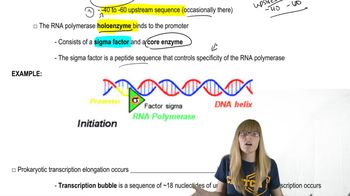
Prokaryotic Transcription

Eukaryotic Transcription Termination

Eukaryotic transcription termination is more complex than in bacteria and involves several factors, including the cleavage of the RNA transcript and the addition of a poly-A tail. After RNA polymerase II transcribes a gene, it continues to elongate until it encounters a polyadenylation signal, which triggers the cleavage of the RNA and the addition of adenine nucleotides. This process is coupled with the release of the RNA polymerase from the DNA template.
추천 영상:
가이드 코스
09:16
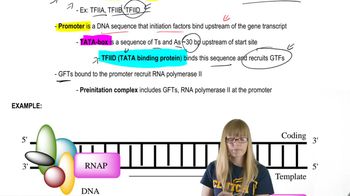
Eukaryotic Transcription

Differences Between Prokaryotic and Eukaryotic Termination

The key differences between transcription termination in prokaryotes and eukaryotes lie in the mechanisms and complexity involved. Prokaryotic termination is generally simpler and can occur co-transcriptionally, while eukaryotic termination involves additional processing steps, such as RNA cleavage and polyadenylation. Furthermore, eukaryotic transcription occurs in the nucleus, requiring additional regulatory mechanisms to ensure proper gene expression.
추천 영상:
가이드 코스
10:14
Prokaryotic Transcription