Ch. 9 - The Molecular Biology of Translation
Sanders - Genetic Analysis: An Integrated Approach 3rd Edition
Sanders3rd EditionGenetic Analysis: An Integrated ApproachISBN: 9780135564172당신이 사용하는 게 아니라요?교과서 변경
9장, 문제 27

The mature mRNA transcribed from the human β-globin gene is considerably longer than the sequence needed to encode the 146–amino acid polypeptide. Give the names of three sequences located on the mature β-globin mRNA but not translated.

검증된 단계별 안내
1
Identify the components of a mature mRNA molecule that are not translated into protein.
Recall that mature mRNA consists of both coding and non-coding regions.
Understand that the coding region is the sequence that is translated into a polypeptide.
Recognize that the non-coding regions include the 5' untranslated region (5' UTR), the 3' untranslated region (3' UTR), and the poly-A tail.
List the three sequences on the mature β-globin mRNA that are not translated: the 5' UTR, the 3' UTR, and the poly-A tail.

비슷한 문제에 대한 검증된 영상 답변:

이 영상 해법은 위 문제에 도움이 된다고 튜터들이 추천한 것입니다.
영상 길이:
1m

주요 개념

질문에 올바르게 답하기 위해 반드시 이해해야 하는 핵심 개념들은 다음과 같습니다.

mRNA Structure

Messenger RNA (mRNA) is a single-stranded molecule that carries genetic information from DNA to the ribosome for protein synthesis. It consists of coding sequences (exons) that are translated into proteins and non-coding sequences (introns and untranslated regions) that play regulatory roles. Understanding the structure of mRNA is essential for identifying which parts are translated and which are not.
추천 영상:
가이드 코스
03:49
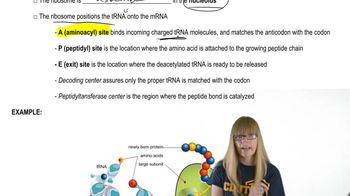
Ribosome Structure

Untranslated Regions (UTRs)

Untranslated regions (UTRs) are segments of mRNA that are not translated into protein. They are found at both the 5' and 3' ends of the mRNA molecule and are crucial for regulating translation efficiency, stability, and localization of the mRNA. The 5' UTR often contains regulatory elements that influence ribosome binding, while the 3' UTR can affect mRNA stability and degradation.
추천 영상:
가이드 코스
00:30
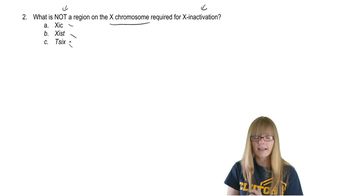
Regions of X Chromosomes

Post-Transcriptional Modifications

Post-transcriptional modifications are processes that occur after the initial transcription of mRNA from DNA. These modifications include the addition of a 5' cap, polyadenylation at the 3' end, and splicing to remove introns. These changes are vital for mRNA stability, transport out of the nucleus, and proper translation, and they help define the mature mRNA that is ultimately translated into protein.
추천 영상:
가이드 코스
04:30
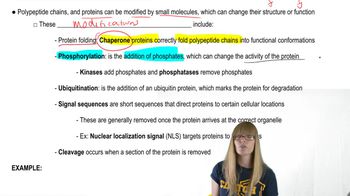
Post Translational Modifications