Ch.10 Proteins Workers of the Cell
Frost - General, Organic and Biological Chemistry 4th Edition
Frost4th EditionGeneral, Organic and Biological ChemistryISBN: 9780134988696당신이 사용하는 게 아니라요?교과서 변경
6장, 문제 50

What kind of interaction attracts the cofactor Mg2+ and ATP to each other? (Hint: Look at the structure of the phosphate group.)

검증된 단계별 안내
1
Examine the structure of ATP, specifically the phosphate groups. ATP contains three phosphate groups (α, β, and γ), which are negatively charged due to the presence of oxygen atoms bonded to phosphorus.
Understand the nature of Mg²⁺. Magnesium ions (Mg²⁺) are positively charged, making them attracted to negatively charged species through electrostatic interactions.
Identify the type of interaction. The attraction between the negatively charged phosphate groups of ATP and the positively charged Mg²⁺ ion is an ionic interaction, which is a type of electrostatic force.
Consider the role of Mg²⁺ as a cofactor. Mg²⁺ stabilizes the negative charges on the phosphate groups of ATP, making it easier for ATP to participate in biochemical reactions.
Conclude that the interaction between Mg²⁺ and ATP is primarily driven by ionic interactions, facilitated by the charge difference between the negatively charged phosphate groups and the positively charged Mg²⁺ ion.

비슷한 문제에 대한 검증된 영상 답변:

이 영상 해법은 위 문제에 도움이 된다고 튜터들이 추천한 것입니다.
영상 길이:
3m
도움이 되었나요?

주요 개념

질문에 올바르게 답하기 위해 반드시 이해해야 하는 핵심 개념들은 다음과 같습니다.

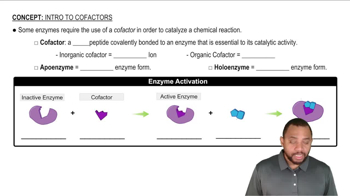
Cofactors in Biochemistry

Cofactors are non-protein chemical compounds that assist enzymes in catalyzing reactions. They can be metal ions, like Mg²⁺, or organic molecules. In the context of ATP, Mg²⁺ acts as a cofactor that stabilizes the negative charges on the phosphate groups, facilitating the transfer of energy during biochemical reactions.
추천 영상:
가이드 코스
2:39
Intro to Cofactors Concept 1

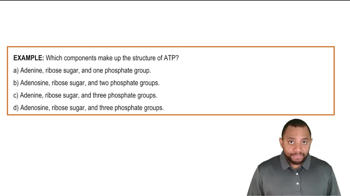
Structure of ATP

Adenosine triphosphate (ATP) consists of an adenosine molecule bonded to three phosphate groups. The phosphate groups are negatively charged and repel each other, creating a high-energy state. The presence of Mg²⁺ helps to shield these negative charges, allowing ATP to interact more effectively with enzymes and other molecules.
추천 영상:
가이드 코스
1:03
Adenosine Triphosphate (ATP) Example 2

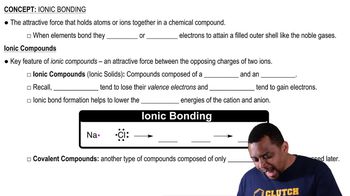
Ionic Interactions

Ionic interactions occur between charged particles, such as the positively charged Mg²⁺ and the negatively charged phosphate groups in ATP. These interactions are crucial for stabilizing the structure of ATP and facilitating its role in energy transfer within cells. The attraction between these opposite charges is fundamental to the biochemical processes involving ATP.
추천 영상:
가이드 코스
02:33
Ionic Bonding Concept 1