
Ch.6 Ionic and Molecular Compounds
Timberlake - Chemistry: An Introduction to General, Organic, and Biological Chemistry 13th Edition
Timberlake13th EditionChemistry: An Introduction to General, Organic, and Biological ChemistryISBN: 9780134421353당신이 사용하는 게 아니라요?교과서 변경
6장, 문제 111b

Consider an ion with the symbol X2+ formed from a representative element.
b. What is the Lewis symbol of the element?

검증된 단계별 안내
1
Identify the representative element that forms the X²⁺ ion. A representative element is typically found in Groups 1A-8A of the periodic table. The X²⁺ ion indicates that the element has lost two electrons to achieve a stable electron configuration.
Determine the group number of the element. The group number corresponds to the number of valence electrons in the neutral atom of the element.
Draw the Lewis symbol for the neutral atom of the element. Represent the valence electrons as dots around the chemical symbol of the element. For example, if the element is in Group 2A, it will have two valence electrons, so two dots will be placed around the symbol.
Adjust the Lewis symbol to reflect the formation of the X²⁺ ion. Since the ion has lost two electrons, remove two dots from the Lewis symbol of the neutral atom. The resulting Lewis symbol for the ion will have no dots, as the valence shell is now empty.
Include the charge of the ion in the Lewis symbol. Write the chemical symbol of the element, followed by the charge as a superscript (e.g., X²⁺). This indicates that the ion has a +2 charge due to the loss of two electrons.

비슷한 문제에 대한 검증된 영상 답변:

이 영상 해법은 위 문제에 도움이 된다고 튜터들이 추천한 것입니다.
영상 길이:
2m
도움이 되었나요?

주요 개념

질문에 올바르게 답하기 위해 반드시 이해해야 하는 핵심 개념들은 다음과 같습니다.

Lewis Symbols

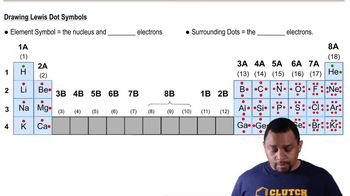
Lewis symbols are a way to represent the valence electrons of an element using dots around the element's symbol. Each dot corresponds to a valence electron, and the arrangement of these dots can indicate how an element might bond with others. For representative elements, the number of dots typically corresponds to the group number in the periodic table.
추천 영상:
가이드 코스
01:27
Lewis Dot Symbols (Simplified) Concept 2

Ion Formation

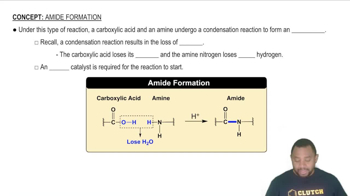
Ions are charged particles that form when atoms gain or lose electrons. A cation, such as X²⁺, is formed when an atom loses electrons, resulting in a positive charge. The charge indicates the number of electrons lost; in this case, X has lost two electrons, which affects its Lewis symbol by reducing the number of dots representing its valence electrons.
추천 영상:
가이드 코스
1:41
Amide Formation Concept 1

Representative Elements

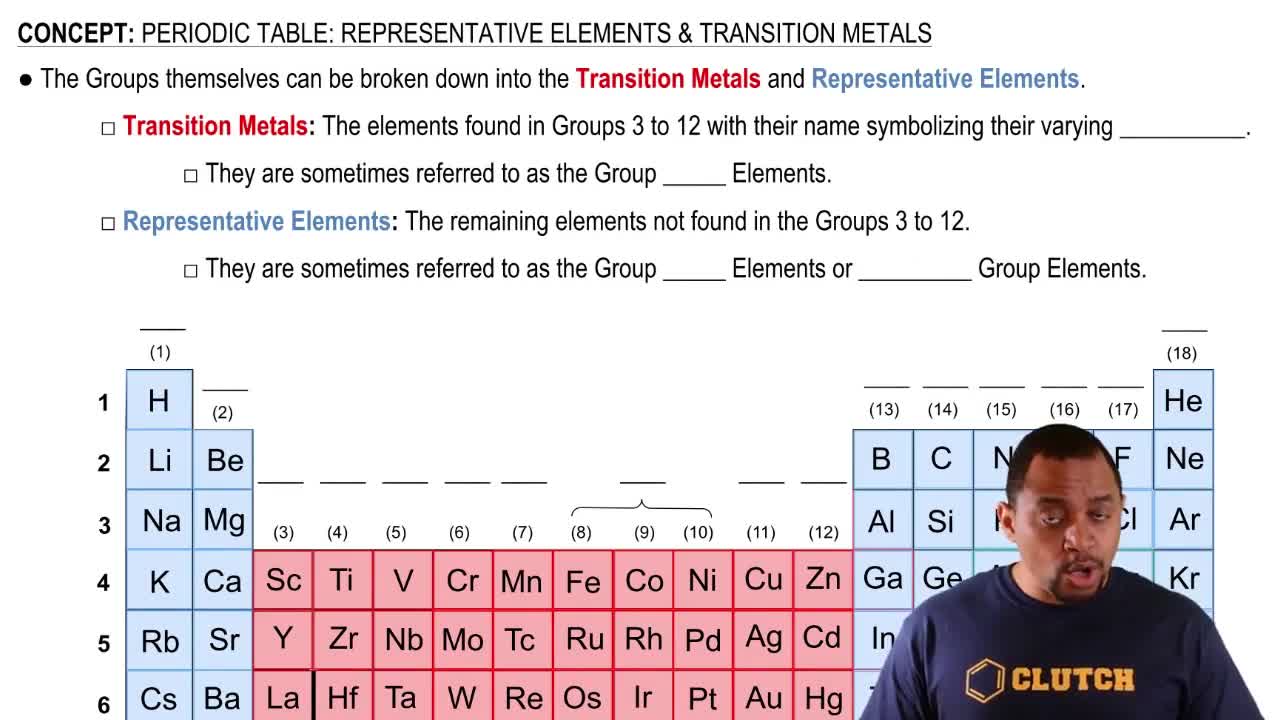
Representative elements are found in groups 1, 2, and 13-18 of the periodic table and include metals, nonmetals, and metalloids. These elements exhibit a wide range of chemical properties and typically follow predictable patterns in their electron configurations. Understanding the group of the representative element helps in determining its common ion forms and corresponding Lewis symbols.
추천 영상:
가이드 코스
03:30
Periodic Table: Representative Elements & Transition Metals