Ch.6 Ionic and Molecular Compounds
Timberlake - Chemistry: An Introduction to General, Organic, and Biological Chemistry 13th Edition
Timberlake13th EditionChemistry: An Introduction to General, Organic, and Biological ChemistryISBN: 9780134421353당신이 사용하는 게 아니라요?교과서 변경
6장, 문제 103c

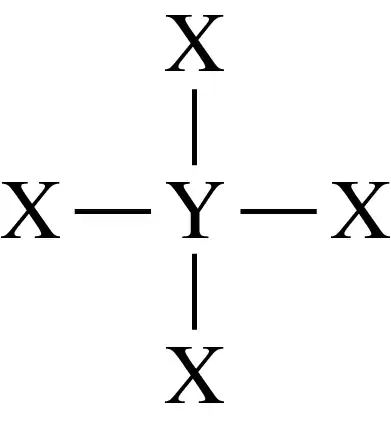
Match each of the Lewis structures (a to c) with the correct diagram (1 to 3) of its shape, and name the shape; indicate if each molecule is polar or nonpolar. Assume X and Y are nonmetals and all bonds are polar covalent.
<IMAGE>
c. Lewis structure of a molecular compound showing nonmetals X and Y with polar covalent bonds.

검증된 단계별 안내
1
Step 1: Analyze the Lewis structure provided. The central atom (X) is bonded to three surrounding atoms (Y) and has one lone pair of electrons. This indicates that the molecular geometry is trigonal pyramidal.
Step 2: Match the trigonal pyramidal geometry to the correct diagram. In the provided diagrams, structure II represents a trigonal pyramidal shape.
Step 3: Determine the polarity of the molecule. Since the bonds are polar covalent and the molecular geometry is asymmetrical (due to the lone pair), the molecule is polar.
Step 4: Repeat the process for other Lewis structures (if provided) by analyzing the bonding, lone pairs, and geometry, and matching them to the diagrams.
Step 5: Summarize the findings by naming the shape, identifying the diagram number, and stating whether the molecule is polar or nonpolar for each Lewis structure.

비슷한 문제에 대한 검증된 영상 답변:

이 영상 해법은 위 문제에 도움이 된다고 튜터들이 추천한 것입니다.
영상 길이:
6m
도움이 되었나요?

주요 개념

질문에 올바르게 답하기 위해 반드시 이해해야 하는 핵심 개념들은 다음과 같습니다.

Lewis Structures

Lewis structures are diagrams that represent the bonding between atoms in a molecule and the lone pairs of electrons that may exist. They help visualize the arrangement of electrons and the connectivity of atoms, which is crucial for predicting molecular shapes and properties. Understanding how to draw and interpret Lewis structures is essential for analyzing molecular geometry and polarity.
추천 영상:
가이드 코스
03:11
Lewis Dot Structures: Ions (Simplified) Concept 1

Molecular Geometry

Molecular geometry refers to the three-dimensional arrangement of atoms within a molecule. It is determined by the number of bonding pairs and lone pairs of electrons around the central atom, which influences the shape of the molecule. Common geometries include linear, trigonal planar, tetrahedral, and bent, each affecting the molecule's physical and chemical properties, including polarity.
추천 영상:
가이드 코스
01:30
Molecular Geometry (Simplified) Concept 1

Polarity of Molecules

Polarity in molecules arises from the distribution of electrical charge, which is influenced by the electronegativity of the atoms involved and the molecular geometry. A molecule is polar if it has a net dipole moment due to an uneven distribution of charge, often resulting from polar covalent bonds. Understanding polarity is crucial for predicting intermolecular interactions and the solubility of substances.
추천 영상:
가이드 코스
01:34
Molecular Polarity (Simplified) Concept 1