Ch. 13 - Characterizing and Classifying Viruses, Viroids, and Prions
Bauman - Microbiology with Diseases by Taxonomy 6th Edition
Bauman6th EditionMicrobiology with Diseases by TaxonomyISBN: 9780134832302당신이 사용하는 게 아니라요?교과서 변경
13장, 문제 9

Which of the following is not a criterion for specific family classification of viruses?
a. The type of nucleic acid
b. Envelope structure
c. Capsid type present
d. Lipid composition

검증된 단계별 안내
1
Step 1: Understand that virus classification into families is primarily based on structural and genetic characteristics that are consistent and distinctive among viruses within a family.
Step 2: Review the common criteria used for virus family classification, which typically include the type of nucleic acid (DNA or RNA), the capsid symmetry (shape and structure of the protein coat), and the presence or absence of an envelope.
Step 3: Recognize that the envelope structure refers to whether the virus has an outer lipid membrane and the nature of its proteins, which is important for classification.
Step 4: Consider the lipid composition; while viruses may have lipid envelopes derived from host cells, the specific lipid composition is not a standard criterion for family classification because it can vary depending on the host cell membrane source.
Step 5: Conclude that among the options, 'lipid composition' is not a criterion used for specific family classification of viruses, unlike the other options which are fundamental classification features.

비슷한 문제에 대한 검증된 영상 답변:

이 영상 해법은 위 문제에 도움이 된다고 튜터들이 추천한 것입니다.
영상 길이:
1m

주요 개념

질문에 올바르게 답하기 위해 반드시 이해해야 하는 핵심 개념들은 다음과 같습니다.

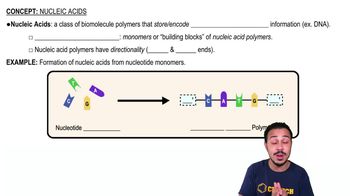
Viral Nucleic Acid Type

Viruses are classified based on the type of nucleic acid they contain, either DNA or RNA, which can be single-stranded or double-stranded. This characteristic is fundamental because it influences viral replication and taxonomy.
추천 영상:
03:22
Nucleic Acids

Viral Envelope and Capsid Structure

The presence and structure of a viral envelope, as well as the capsid type (such as icosahedral or helical), are key morphological features used in virus classification. These structures affect virus stability and host interaction.
추천 영상:
05:12
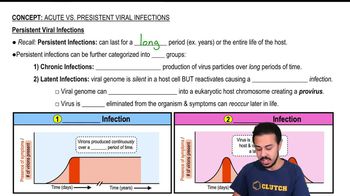
Persistent Viral Infections

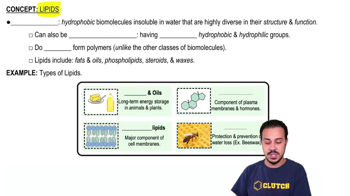
Lipid Composition in Viruses

While some viruses have lipid envelopes derived from host membranes, the specific lipid composition is not a standard criterion for virus family classification. Lipid content varies and is less reliable for taxonomic purposes.
추천 영상:
04:19
Lipids