Ch. 13 - Characterizing and Classifying Viruses, Viroids, and Prions
Bauman - Microbiology with Diseases by Taxonomy 6th Edition
Bauman6th EditionMicrobiology with Diseases by TaxonomyISBN: 9780134832302당신이 사용하는 게 아니라요?교과서 변경
13장, 문제 8

Describe lysogeny.

검증된 단계별 안내
1
Understand that lysogeny is a type of viral life cycle specific to bacteriophages, which are viruses that infect bacteria.
Recognize that in lysogeny, the bacteriophage's DNA integrates into the host bacterium's genome, becoming a prophage.
Note that the prophage DNA replicates along with the host cell's DNA without causing immediate harm or lysis to the host.
Explain that the lysogenic cycle allows the virus to remain dormant within the host until certain conditions trigger it to enter the lytic cycle, where new viruses are produced and the host cell is lysed.
Summarize that lysogeny is a form of viral dormancy and genetic integration that enables the virus to persist in the bacterial population over time.

비슷한 문제에 대한 검증된 영상 답변:

이 영상 해법은 위 문제에 도움이 된다고 튜터들이 추천한 것입니다.
영상 길이:
2m
도움이 되었나요?

주요 개념

질문에 올바르게 답하기 위해 반드시 이해해야 하는 핵심 개념들은 다음과 같습니다.

Lysogeny

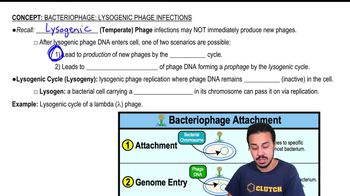
Lysogeny is a viral life cycle in which a bacteriophage integrates its genome into the host bacterium's DNA, becoming a prophage. Instead of immediately destroying the host, the virus remains dormant and replicates along with the host cell.
추천 영상:
가이드 코스
03:37
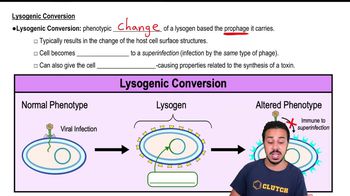
Lysogenic Conversion

Prophage

A prophage is the viral DNA integrated into the bacterial chromosome during lysogeny. It can remain inactive for many generations but may later be induced to enter the lytic cycle, producing new viruses and lysing the host.
추천 영상:
가이드 코스
05:27
Bacteriophage: Lysogenic Phage Infections

Lytic vs Lysogenic Cycle

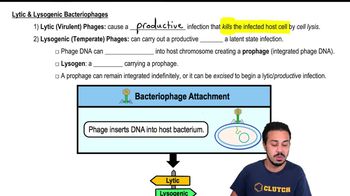
The lytic cycle involves active viral replication and host cell destruction, while the lysogenic cycle involves viral dormancy within the host genome. Understanding the switch between these cycles is key to grasping lysogeny.
추천 영상:
가이드 코스
04:34
Lytic & Lysogenic Bacteriophages