
교과서 질문
The study of where and when diseases occur and how they are transmitted within populations is ___________ .
1713
views

 검증된 단계별 안내
 02:29
02:29
 03:27
03:27 03:40
03:40The study of where and when diseases occur and how they are transmitted within populations is ___________ .
The study of the cause of a disease is __________ .
List three conditions that create opportunities for pathogens to become harmful in a human.
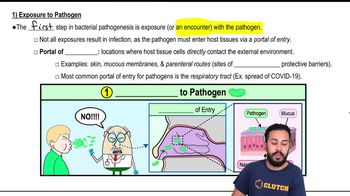
The most frequent portal of entry for pathogens is:
a. The respiratory tract
b. The skin
c. The conjunctiva
d. A cut or wound
List Koch’s four postulates, and describe situations in which not all may be applicable.
Which of the following is false concerning microbial contaminants?
a. Contaminants may become opportunistic pathogens.
b. Most microbial contaminants will eventually cause harm.
c. Contaminants may be a part of the transient microbiota.
d. Contaminants may be introduced by a mosquito bite.