Ch. 14 - Infection, Infectious Diseases, and Epidemiology
Bauman - Microbiology with Diseases by Taxonomy 6th Edition
Bauman6th EditionMicrobiology with Diseases by TaxonomyISBN: 9780134832302당신이 사용하는 게 아니라요?교과서 변경
14장, 문제 4

The study of where and when diseases occur and how they are transmitted within populations is ___________ .

검증된 단계별 안내
1
Identify the key terms in the question: 'where and when diseases occur' and 'how they are transmitted within populations.'
Recall that the study of the distribution and determinants of health-related states or events in specified populations is called Epidemiology.
Understand that Epidemiology focuses on patterns, causes, and effects of health and disease conditions in defined populations.
Recognize that this field helps in controlling diseases and improving public health by studying transmission and occurrence.
Conclude that the blank in the sentence should be filled with the term 'Epidemiology.'

비슷한 문제에 대한 검증된 영상 답변:

이 영상 해법은 위 문제에 도움이 된다고 튜터들이 추천한 것입니다.
영상 길이:
2m
도움이 되었나요?

주요 개념

질문에 올바르게 답하기 위해 반드시 이해해야 하는 핵심 개념들은 다음과 같습니다.

Epidemiology

Epidemiology is the study of the distribution and determinants of health-related states or events in specific populations. It focuses on when and where diseases occur and how they spread, helping to control and prevent outbreaks.

Disease Transmission

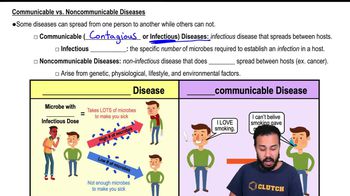
Disease transmission refers to the mechanisms by which infectious agents spread from one host to another. Understanding transmission routes, such as direct contact, airborne, or vector-borne, is essential for controlling disease spread.
추천 영상:
04:57
Communicable vs. Noncommunicable Diseases

Population Health

Population health examines the health outcomes of groups of individuals, including the distribution of diseases and health determinants. It provides context for studying disease patterns and the impact of interventions on communities.
추천 영상:
06:00
Microorganisms in Health & Disease