Why did epidemiologists immediately suspect terrorism in the cases of anthrax in the fall of 2001?
Ch. 19 - Pathogenic Gram-Positive Bacteria
19장, 문제 7
Explain the different actions of pyogenic and pyrogenic toxins.
검증된 단계별 안내1
Step 1: Define pyogenic toxins by explaining that these toxins stimulate the production of pus by attracting and activating neutrophils, which are white blood cells involved in the inflammatory response.
Step 2: Describe how pyogenic toxins contribute to the formation of abscesses and localized infections by promoting the accumulation of neutrophils and dead cells at the infection site.
Step 3: Define pyrogenic toxins as toxins that induce fever by acting on the hypothalamus, the part of the brain that regulates body temperature.
Step 4: Explain that pyrogenic toxins trigger the release of endogenous pyrogens such as interleukin-1 (IL-1) and tumor necrosis factor (TNF), which then cause the hypothalamus to raise the body's temperature set point, resulting in fever.
Step 5: Summarize the key difference by stating that pyogenic toxins primarily cause pus formation and localized inflammation, while pyrogenic toxins primarily cause systemic effects like fever.

비슷한 문제에 대한 검증된 영상 답변:
이 영상 해법은 위 문제에 도움이 된다고 튜터들이 추천한 것입니다.
영상 길이:
2m도움이 되었나요?
주요 개념
질문에 올바르게 답하기 위해 반드시 이해해야 하는 핵심 개념들은 다음과 같습니다.
Pyogenic Toxins
Pyogenic toxins are bacterial toxins that stimulate the production of pus by attracting and activating neutrophils at the site of infection. These toxins often cause localized inflammation and tissue damage, leading to abscess formation. They are commonly produced by bacteria like Staphylococcus aureus.
추천 영상:
가이드 코스
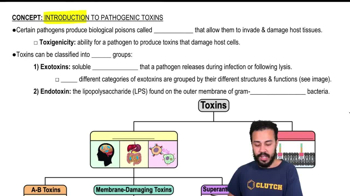
Introduction to Pathogenic Toxins
Pyrogenic Toxins
Pyrogenic toxins are bacterial exotoxins that induce fever by triggering the release of endogenous pyrogens such as interleukin-1 and tumor necrosis factor from immune cells. These toxins can cause systemic effects like fever and rash, as seen in diseases like scarlet fever caused by Streptococcus pyogenes.
추천 영상:
가이드 코스
Introduction to Pathogenic Toxins
Mechanisms of Immune Activation by Toxins
Both pyogenic and pyrogenic toxins activate the immune system but through different pathways: pyogenic toxins recruit neutrophils causing pus formation, while pyrogenic toxins act as superantigens or stimulate cytokine release leading to fever. Understanding these mechanisms explains their distinct clinical manifestations.
추천 영상:
가이드 코스
Introduction to Pathogenic Toxins
관련 실천
교과서 질문
1161
views
교과서 질문
Explain why Staphylococcus epidermidis is rarely pathogenic while the similar S. aureus is more commonly virulent.
1123
views
교과서 질문
Explain why Gram-positive mycoplasmas appear pink in a Gram-stained smear.
1940
views
교과서 질문
The bacterium causing pseudomembranous colitis is
a. Clostridium difficile
b. Streptococcus pyogenes
c. Mycobacterium avium-intracellulare
d. Corynebacterium diphtheriae
1102
views
교과서 질문
Pathogenic strains that have become resistant to antimicrobial drugs are found in which of the following genera?
a. Staphylococcus
b. Mycobacterium
c. Enterococcus
d. All of the above
978
views
교과서 질문
Of the following genera, which can survive the harshest conditions?
a. Staphylococcus
b. Clostridium
c. Mycobacterium
d. Actinomyces
1422
views