Ch. 19 - Pathogenic Gram-Positive Bacteria
Bauman - Microbiology with Diseases by Taxonomy 6th Edition
Bauman6th EditionMicrobiology with Diseases by TaxonomyISBN: 9780134832302당신이 사용하는 게 아니라요?교과서 변경
19장, 문제 8

Explain why Staphylococcus epidermidis is rarely pathogenic while the similar S. aureus is more commonly virulent.

검증된 단계별 안내
1
Step 1: Understand the basic characteristics of both bacteria. Staphylococcus epidermidis is a common commensal organism found on human skin and mucous membranes, whereas Staphylococcus aureus is also a skin commensal but has a higher potential to cause disease.
Step 2: Examine the virulence factors. S. aureus produces a variety of virulence factors such as toxins (e.g., hemolysins, enterotoxins), enzymes (e.g., coagulase), and surface proteins that facilitate adhesion and immune evasion. In contrast, S. epidermidis lacks many of these potent virulence factors.
Step 3: Consider the role of coagulase. S. aureus is coagulase-positive, meaning it can clot plasma, which helps it evade the host immune system and establish infections. S. epidermidis is coagulase-negative, which limits its ability to cause invasive disease.
Step 4: Analyze the typical infections caused. S. aureus is often associated with acute infections such as abscesses, pneumonia, and sepsis, while S. epidermidis is more commonly linked to opportunistic infections, especially related to implanted medical devices due to its ability to form biofilms.
Step 5: Summarize the pathogenic potential. The rarity of pathogenicity in S. epidermidis compared to S. aureus is mainly due to the absence of aggressive virulence factors and its role as a commensal organism, whereas S. aureus possesses multiple mechanisms that enhance its virulence and ability to cause disease.

비슷한 문제에 대한 검증된 영상 답변:

이 영상 해법은 위 문제에 도움이 된다고 튜터들이 추천한 것입니다.
영상 길이:
3m
도움이 되었나요?

주요 개념

질문에 올바르게 답하기 위해 반드시 이해해야 하는 핵심 개념들은 다음과 같습니다.

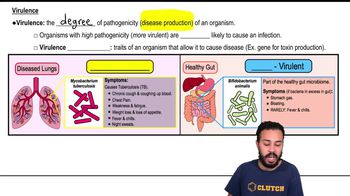
Virulence Factors

Virulence factors are molecules produced by pathogens that enable them to colonize hosts, evade the immune system, and cause disease. S. aureus possesses numerous virulence factors such as toxins, enzymes, and surface proteins that promote infection, whereas S. epidermidis lacks many of these, making it less pathogenic.
추천 영상:

Commensal vs. Pathogenic Behavior

S. epidermidis is primarily a commensal bacterium found on human skin, usually harmless and part of the normal flora. In contrast, S. aureus is more opportunistic and can transition from colonizer to pathogen, causing a wide range of infections due to its ability to invade tissues and evade immune responses.
추천 영상:
가이드 코스
03:40
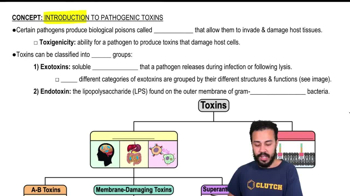
Introduction to Pathogenic Toxins

Biofilm Formation and Immune Evasion

Both species can form biofilms, but S. epidermidis mainly forms biofilms on medical devices, leading to chronic infections rather than acute disease. S. aureus forms biofilms and also produces factors that actively disrupt immune defenses, contributing to its higher virulence and ability to cause severe infections.
추천 영상: