Ch. 19 - Pathogenic Gram-Positive Bacteria
Bauman - Microbiology with Diseases by Taxonomy 6th Edition
Bauman6th EditionMicrobiology with Diseases by TaxonomyISBN: 9780134832302당신이 사용하는 게 아니라요?교과서 변경
19장, 문제 1

For each of the following diseases or conditions, indicate the genus (or genera) of bacterium that causes it.


___ Scalded skin syndrome
___ Osteomyelitis
___ Pharyngitis
___ Scarlet fever
___ Pyoderma
___ Rheumatic fever
___ Glomerulonephritis
___ Sinusitis
___ Otitis media
___ Anthrax
___ Myonecrosis
___ Diphtheria
___ Leprosy
___ Dental caries
___ Acne


A. Staphylococcus
B. Streptococcus
C. Mycobacterium
D. Listeria
E. Propionibacterium
F. Corynebacterium
G. Bacillus
H. Clostridium
I. Actinomyces

검증된 단계별 안내
1
Step 1: Understand that each disease or condition is caused by a specific genus of bacteria. Your task is to match each disease with the correct bacterial genus from the provided list.
Step 2: Recall or research the common bacterial causes for each condition. For example, Scalded skin syndrome is typically caused by bacteria from the genus Staphylococcus, while Diphtheria is caused by Corynebacterium.
Step 3: Use the process of elimination and your knowledge of microbiology to assign the correct genus to each disease. For instance, diseases like Scarlet fever and Rheumatic fever are associated with Streptococcus, while Anthrax is caused by Bacillus.
Step 4: Write down the genus letter (A through I) next to each disease based on your matching. This helps organize your answers clearly and ensures you have covered all diseases.
Step 5: Review your matches to confirm they align with known microbiological facts about each disease's causative agent, ensuring accuracy before finalizing your answers.

비슷한 문제에 대한 검증된 영상 답변:

이 영상 해법은 위 문제에 도움이 된다고 튜터들이 추천한 것입니다.
영상 길이:
2m

주요 개념

질문에 올바르게 답하기 위해 반드시 이해해야 하는 핵심 개념들은 다음과 같습니다.

Bacterial Genus and Disease Association

Many bacterial diseases are caused by specific genera, each with characteristic pathogenic mechanisms. Understanding which genus is responsible for a disease helps in diagnosis and treatment. For example, Staphylococcus often causes skin infections, while Streptococcus is linked to throat infections and rheumatic fever.
추천 영상:
02:35
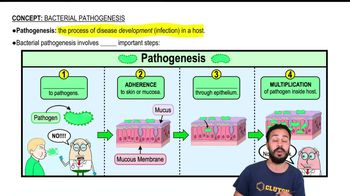
Intro to Bacterial Pathogenesis

Pathogenesis and Clinical Manifestations

Different bacteria cause distinct clinical syndromes based on their virulence factors and tissue tropism. Recognizing the symptoms and affected tissues (e.g., skin, bone, respiratory tract) aids in linking diseases to their bacterial causes. For instance, Mycobacterium causes chronic infections like leprosy, while Clostridium produces toxins leading to myonecrosis.
추천 영상:
02:35
Intro to Bacterial Pathogenesis

Microbial Taxonomy and Identification

Bacterial genera are classified based on morphology, staining, and biochemical properties. Knowing these classifications helps differentiate similar diseases caused by different bacteria. For example, Corynebacterium diphtheriae causes diphtheria, distinguished from other genera by its club-shaped cells and toxin production.
추천 영상:
02:23
Introduction to Taxonomy